On this page
- Why Does This Question Keep Coming Up in the Exam Room?
- What’s Actually in an Apple, and Which Parts Are the Concern
- Where I Actually Draw the Line
- What the Fiber Is Actually Doing in the Colon
- When More Fiber Is Not Obviously Better
- The Limits of “Diverse Is Better”
- My Bottom Line, After the Imaging and the Needle Both Get Considered
Why Does This Question Keep Coming Up in the Exam Room?
I don’t run a nutrition practice. My board is neurology, and most of what walks through my door is a dog with a gait change, a seizure history, or a disc that’s decided to misbehave. But owners ask me about apples anyway, usually while I’m palpating a spine or watching a dog walk a straight line, because apples are sitting in the kitchen and the dog is staring at them.
Hazel was a 9-year-old, 58-pound Labrador mix I saw for a mild vestibular episode on a Tuesday afternoon in October. While I ran her through a neuro exam, her owner mentioned that Hazel had started begging for apple slices that fall and asked, almost as an aside, whether that was something to worry about. It’s a fair question, and it’s one I answer the same way I’d answer a question about acupuncture or an MRI: don’t guess, look at what the tissue and the evidence actually show. For apples, that means separating the flesh from the parts of the plant that carry a real, if small, chemical risk.
What’s Actually in an Apple, and Which Parts Are the Concern
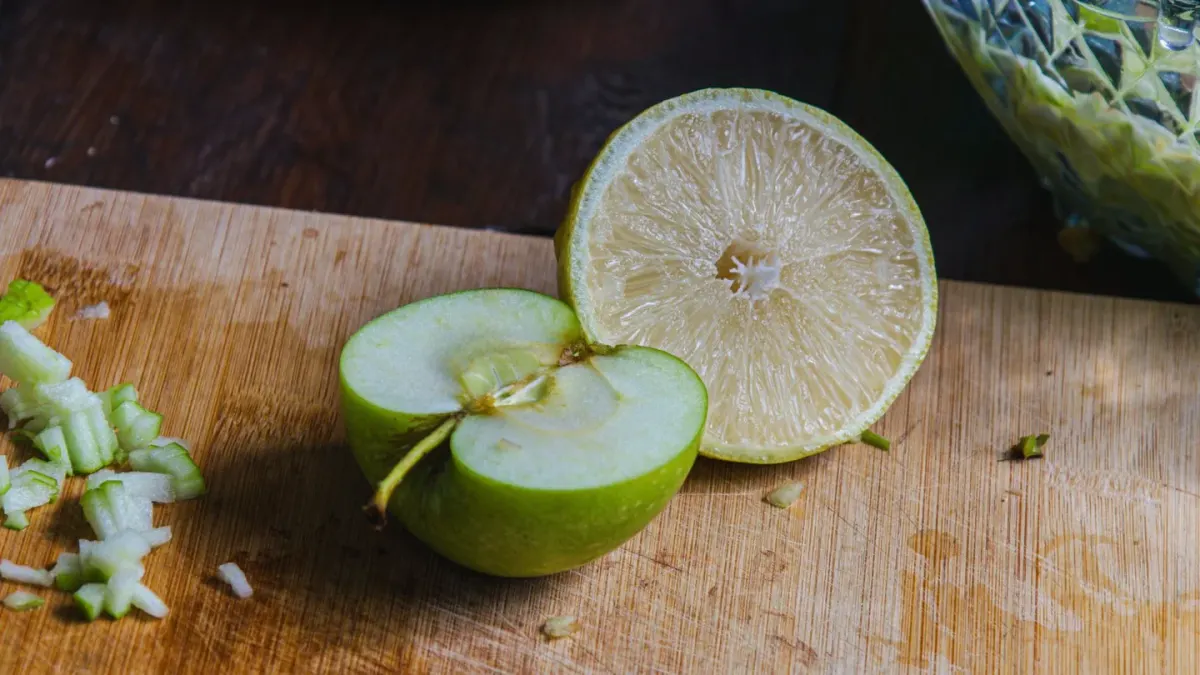
Apple flesh itself is not the hazard. According to ASPCA poison control resources, the toxic principle in apple plants is cyanogenic glycosides, and the stems, leaves, and seeds are the parts that contain cyanide-releasing compounds — not the fruit pulp a dog would eat off a cutting board. That distinction matters more than owners tend to assume. A dog that snatches a slice of peeled, cored apple flesh off the counter is in an entirely different situation than a dog that works through a whole apple, stem and core included, in the backyard.
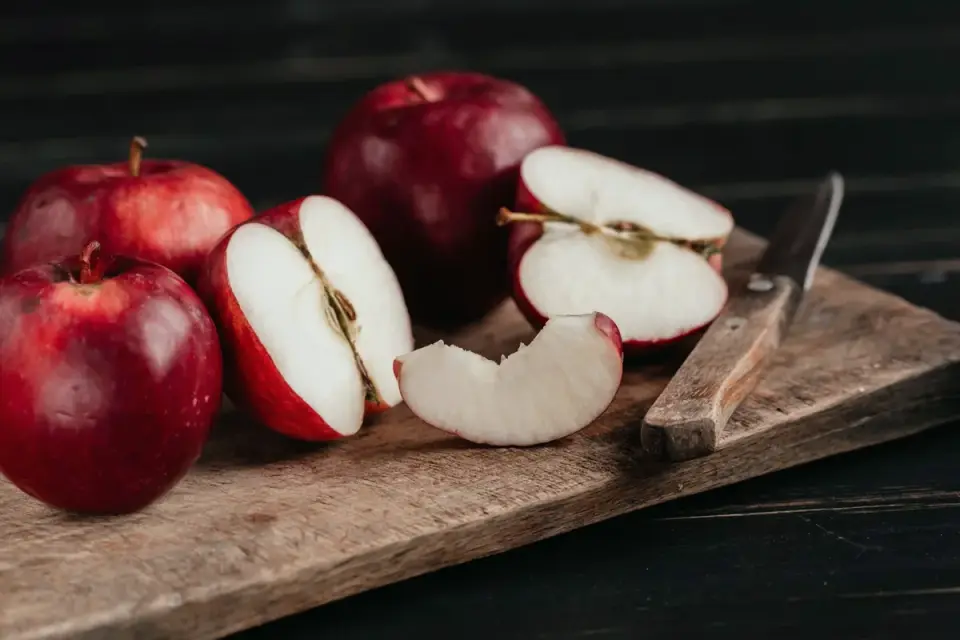
The core and stem carry a second, more mundane risk: they’re firm and irregularly shaped, which makes them a plausible obstruction risk in small dogs or dogs that don’t chew before swallowing. That’s a mechanical problem, not a toxicological one, and it’s usually the more relevant one in practice.
Where I Actually Draw the Line
I don’t lose sleep over a dog that mouths an apple core once. The seed load required to matter is large, and most dogs don’t chew seeds thoroughly enough to release meaningful amounts of the cyanide-precursor compound in a single incident. Where I get more careful is with dogs that have unrestricted access to a whole apple — under a tree, in a compost pile, wherever fallen fruit accumulates — because repeated, unmonitored exposure changes the math in a way a single supervised treat doesn’t.
My working rule for owners is simple: peeled or unpeeled is fine, flesh only, no stem, no core, no seeds, and portioned to a size that fits the dog rather than the apple. That’s not a disease-prevention claim — it’s risk management, the same category of thinking I’d apply to deciding whether a dog needs advanced imaging or whether watchful waiting is reasonable.
What the Fiber Is Actually Doing in the Colon
This is the part of the apple question that I find genuinely interesting, because it’s where the microbiome literature has something specific to say. Apple flesh and apple pomace contain fermentable fiber, and canine-specific fermentation research has looked directly at what happens to that fiber once it reaches the colon. In work examining fruit and vegetable fibers fermented with canine fecal inoculum, PubMed indexes findings showing that apple pomace was among the more fermentable substrates tested, alongside carrot pomace and flaxseed, producing meaningful short-chain fatty acid output as it fermented in vitro. That fermentation matters because short-chain fatty acids are part of how colonic bacteria feed the gut lining and help regulate the local inflammatory environment — mechanism, not miracle.
It’s worth being precise about what that evidence does and doesn’t establish. It’s in vitro fermentation data using dog fecal inoculum, which tells us apple-derived fiber is a plausible fermentation substrate for resident gut bacteria — it is not a clinical trial showing that feeding apple slices changes a dog’s microbiome composition or its symptoms. I’d rather say that plainly than let a mechanistic finding get quietly upgraded into an outcome claim.
When More Fiber Is Not Obviously Better
Here’s where the evidence-grading habit I bring from neurology earns its keep: more of a good mechanism is not automatically a better outcome, and a fiber source that helps one dog can complicate another. Ranger was a 6-year-old German Shepherd, 71 pounds, that I saw as a second-opinion consult for a suspected disc issue; his workup turned up an incidental diagnosis of exocrine pancreatic insufficiency that his primary vet was already managing. His owner had read that fiber was “good for gut health” and had started adding extra fruit and vegetable matter to his diet on top of his enzyme supplementation, and his stool quality got worse, not better, over about three weeks.
That’s consistent with how EPI is actually managed. Standard treatment for the condition is pancreatic enzyme replacement therapy alongside nutritional management — specifically low-residue diets with moderate fat content — plus cobalamin supplementation, as described in a review published in JAVMA. Extra fermentable fiber, however well-intentioned, works against a low-residue approach in a dog whose digestive system is already compromised. It was a useful reminder that “supports the microbiome” is not a universal instruction — it depends enormously on the dog in front of you.
The same review notes that the field still doesn’t fully understand why some EPI dogs maintain persistent dysbiosis even after enzyme replacement therapy is underway, which is an honest admission of a real gap rather than a settled answer.
The Limits of “Diverse Is Better”
There’s a broader lesson in the probiotic and prebiotic literature that applies directly here: more microbial diversity isn’t automatically the marker of success that owners and even some clinicians assume it is. A peer-reviewed trial published in Frontiers in Veterinary Science looking at probiotic response in dogs found that diversity metrics did not distinguish the dogs that responded clinically from the dogs that didn’t. In other words, a microbiome that looks more diverse on paper isn’t necessarily doing more work for that particular animal. I bring up that finding here because it’s the same caution I’d apply to apple fiber, or to any single dietary input: the mechanism is real, but the individual response is the thing that actually counts, and it varies.
That’s also the boundary of what I can responsibly say as a neurologist rather than a nutritionist or a gastroenterologist. I can tell you what the fermentation and clinical literature show and where it stops; I’m not going to extrapolate past it to tell an EPI owner exactly how many grams of apple pomace is fine for their specific dog. That’s a conversation for the vet managing that condition day to day, ideally with reference to the resources in The Complete Guide to Dog Gut Health and Digestion and What a Healthy Dog Gut Microbiome Looks Like as background, not a substitute for that individualized care.
My Bottom Line, After the Imaging and the Needle Both Get Considered
I keep coming back to Hazel, because her case was uncomplicated in a way that’s easy to forget once you’ve spent a section talking about EPI and dysbiosis. She was a healthy, middle-aged dog with no GI disease, and a few peeled, cored apple slices a week were never going to move her clinical picture in any direction I needed to worry about. Most dogs that ask this question at the kitchen counter are Hazel, not Ranger. I told her owner to keep doing what she was doing: flesh only, no core, no seeds, portioned to Hazel’s size rather than the whole apple’s.
What changes my answer isn’t the apple — it’s the dog. A healthy adult dog with normal digestion has very little to fear from a well-prepared apple slice, and the fermentable fiber in that slice is doing legitimate, if modest, work for the bacteria that live in its colon. A dog with a pancreatic or GI condition where residue and fermentable fiber are already part of the clinical picture needs that apple question routed through the vet managing that condition, not answered generically. I’d rather give an owner that nuance than a flat yes or no, the same way I’d rather order the right scan than guess at a diagnosis.
Frequently asked questions
Can dogs eat apple skin?
Yes. Apple skin isn't a listed toxic part in ASPCA poison control guidance — it's the stem, leaves, and seeds that carry cyanogenic compounds, not the peel or flesh. Wash it first to reduce pesticide residue.
What happens if a dog swallows an apple seed or two?
A seed or two swallowed whole, without thorough chewing, is unlikely to cause a problem — the amount of cyanogenic compound released depends heavily on how crushed the seeds are and how many are consumed. Repeated, unsupervised access to whole apples is the scenario worth avoiding, not an isolated seed.
Is apple fiber good for a dog's gut microbiome?
Fermentation research using canine fecal inoculum shows apple-derived fiber is a fermentable substrate that bacteria can use to produce short-chain fatty acids. That's a plausible mechanism, not a guarantee of a clinical outcome for every dog, especially dogs with existing digestive disease.
Should dogs with digestive conditions avoid apples?
Dogs with conditions like exocrine pancreatic insufficiency are often managed on low-residue diets, and added fermentable fiber can work against that plan. Any dog with a diagnosed GI or pancreatic condition should have apple as a treat cleared by the vet managing that condition.
Sources
- Toxic and Non-toxic Plants: Apple — ASPCA
- Fruit and vegetable fiber fermentation by gut microflora from canines — PubMed
- Exocrine Pancreatic Insufficiency in Dogs and Cats: A Review — JAVMA
- Probiotic Response and Microbiome Diversity in Dogs — Frontiers in Veterinary Science