On this page
- The Vine to the Bowl: Why Ripeness Is the Whole Story
- What the Green Parts Actually Do to a Dog’s Nervous System and Gut
- The Dogs I Watch Most Closely Around Garden Produce
- Fiber, Fermentation, and the Microbiome’s Slow Response
- A Neurologist’s Read on Nightshades and “Cooling” Foods
- Where the Evidence Is Strong, Where It’s Thin
The call I remember most clearly involved a seven-year-old Beagle named Otis and a raised garden bed. His owner had stepped inside for maybe ten minutes on a warm September afternoon, and when she came back out, Otis had pulled down a heavy, still-green cluster of tomatoes and was working through the stems along with the fruit. He weighed about twenty-six pounds, had never had a GI complaint in his life, and within two hours he was drooling heavily and refusing his dinner. That combination — sudden hypersalivation, appetite loss, and a known ingestion of unripe fruit and vine — is exactly the pattern that sends a case from “watch him” to “come in now.” Otis did fine after supportive care and an uneventful twelve hours, but the case has stuck with me because it draws such a clean line between two very different plants that happen to share a name: the ripe tomato on your cutting board, and the green, growing plant it came from.
The Vine to the Bowl: Why Ripeness Is the Whole Story
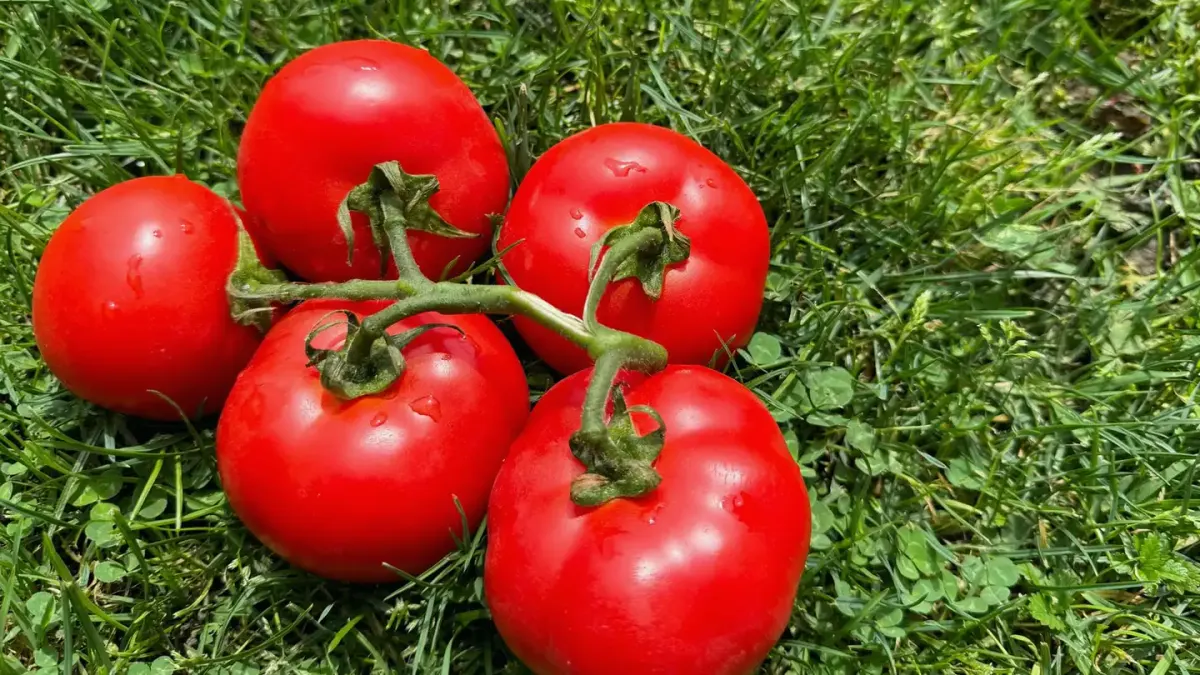
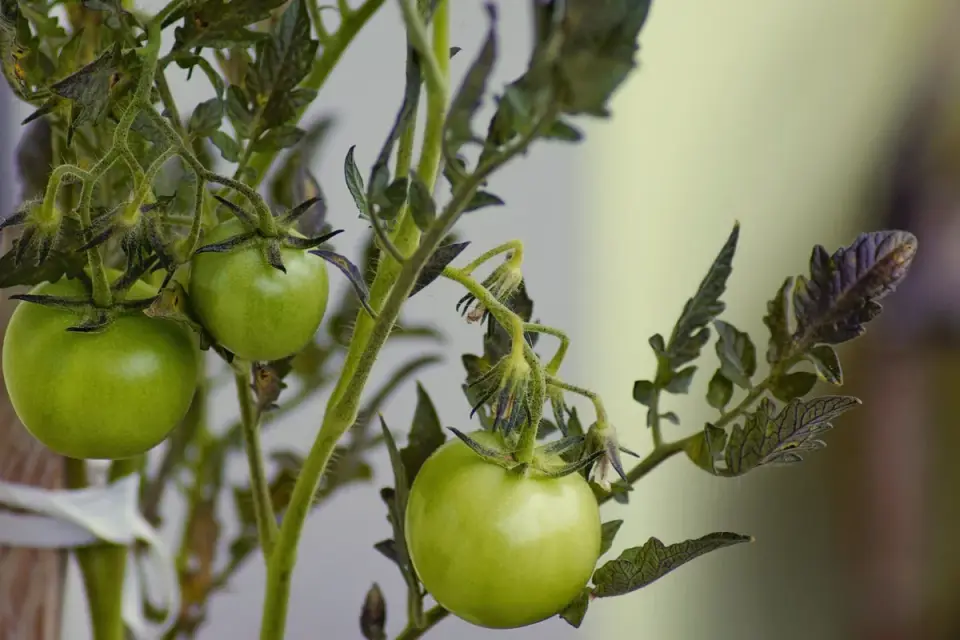
A tomato is not one substance nutritionally or toxicologically — it’s a moving target across its own ripening. Green tissue, unripe fruit, stems, and vines carry meaningfully higher concentrations of the glycoalkaloid tomatine than fully ripened, red flesh does. The ASPCA lists solanine as the toxic principle in the tomato plant, and its poison-control page notes that ripe fruit is non-toxic and can be an occasional treat in moderation, while green parts are the ones that carry real risk. That distinction is the whole answer to “can dogs eat tomatoes,” and it’s why I resist giving a flat yes or no without asking which part of the plant is actually on the table.
What the Green Parts Actually Do to a Dog’s Nervous System and Gut
Mechanistically, tomatine and solanine are glycoalkaloids the plant produces as a defense against being eaten before its seeds are ready to disperse — which is a tidy explanation for why concentration falls as the fruit ripens. Pet Poison Helpline describes these compounds as concentrated most heavily in the leaves, stems, vines, flowers, and unripe green fruit, and reports that dogs ingesting large amounts can develop gastrointestinal signs such as vomiting and diarrhea alongside neurologic signs including weakness, lethargy, stumbling, and disorientation. As a neurologist, that neurologic signature is what I key on: it tells you the exposure was significant enough to reach beyond the gut, and it’s a reason not to treat a green-tomato binge as a routine stomach upset.
The Dogs I Watch Most Closely Around Garden Produce
In my practice, the dogs I worry about aren’t usually the healthy adults stealing a single cherry tomato off the counter — it’s the ones whose digestive system has little reserve to begin with. I think of an eleven-year-old German Shepherd I managed for exocrine pancreatic insufficiency, a dog already on enzyme replacement and a carefully built low-residue diet to keep his weight and stool quality stable. His owners knew better than to hand him raw vegetable trimmings from the kitchen, because even foods that are “fine” for most dogs can tip a fragile digestive balance. That’s not a tomato-specific rule; it’s a reminder that ripeness answers the toxicity question, but the individual dog’s baseline gut function answers the tolerance question, and those are two separate conversations owners often collapse into one.
For dogs like that Shepherd, the literature is fairly specific about what actually helps. Exocrine pancreatic insufficiency is treated with pancreatic enzyme replacement therapy, nutritional management using low-residue diets with moderate fat content, and cobalamin supplementation, according to a review published in JAVMA. The same review is candid about what isn’t fully worked out yet: it notes that future studies are needed to understand why dysbiosis persists in some animals even after enzyme therapy begins, and to test treatments that might correct it. I’d rather say that plainly than pretend the picture is tidier than it is.
Fiber, Fermentation, and the Microbiome’s Slow Response
Ripe tomato flesh itself is mostly water with a modest amount of fiber, and in small amounts it behaves the way most low-toxin produce does moving through a healthy dog’s gut — it gets fermented, in part, by resident bacteria, and it contributes marginally to stool bulk. Where I try to keep expectations grounded is around probiotic supplementation as a fix for garden-produce upset. A randomized controlled trial in Frontiers in Veterinary Science found that diversity metrics did not distinguish non-responders from responders to a probiotic intervention, which is a fair signal that we still can’t reliably predict which dogs will show a measurable microbiome shift from a given probiotic and which won’t. I stay anchored to how a modality like this is thought to work — supporting fermentation capacity and competitive exclusion of less favorable organisms — rather than promising it will resolve a specific GI event, because the mechanism is better supported than the outcome data at this point. For a broader look at how that ecosystem is built and maintained day to day, The Complete Guide to Dog Gut Health and Digestion walks through the fiber and fermentation basics in more depth than a single vegetable can carry on its own.
A short note here, because it matters: fiber quality varies a lot by source, and tomato flesh is not a fiber supplement. If you’re choosing a produce-based fiber source deliberately, look at what’s actually documented for that ingredient rather than assuming any fruit or vegetable behaves the same way in the gut.
A Neurologist’s Read on Nightshades and “Cooling” Foods
I trained in Western neurology, and I also studied traditional Chinese veterinary food therapy, and tomato is one of the few ingredients where both frameworks land on a similar caution without either needing to borrow from the other. In TCVM food therapy, tomato is generally categorized among cooling foods, used sparingly and typically avoided in dogs with a cold or deficient constitution — a soft, non-quantified caution that happens to point in the same direction as the Western toxicology data on green tissue: use restraint, know the dog in front of you, and don’t treat “generally fine” as “unlimited.” I don’t reach for acupuncture or herbal strategy to manage a tomato exposure itself; that’s not what either modality is for here. But the habit of asking how a food is thought to act on an individual constitution, not just what its worst-case toxin profile is, changes how I counsel owners about produce in general — including which dogs get a firm no before they get a taste.

I still think about a young Labrador mix I saw a few summers back, brought in the same evening she’d eaten what her owner estimated was half a dozen ripe cherry tomatoes straight off the vine — no green fruit, no stems, nothing else unusual in the yard. She was bright, hungry, and had one loose stool that night and normal stool the next morning. No treatment was needed beyond a bland dinner and a call the following day to confirm she was back to normal. That case is the mirror image of Otis’s: same plant, same yard, completely different outcome, because the only thing that changed was which part of the tomato she’d actually eaten. I bring both cases up with owners because the anxiety around “can my dog eat tomatoes” almost always resolves once you separate the fruit from the plant.
Where the Evidence Is Strong, Where It’s Thin
The evidence that ripe tomato flesh carries low toxin concentration and that green plant tissue carries meaningfully more is well established by poison-control sources. What’s thinner is anything specific to tomato fiber or tomato pulp’s effect on the canine microbiome — that data largely doesn’t exist yet as tomato-specific research, so I’m not going to manufacture a claim it can support and it doesn’t. What the broader probiotic and gut-health literature does support is a general picture of the microbiome as a system that supports overall digestive resilience, one that’s more usefully understood through diversity and fermentation function than through any single vegetable’s effect on it. If you want that broader picture before deciding how tomato bits fit into a dog’s routine, What a Healthy Dog Gut Microbiome Looks Like is a better starting point than trying to extrapolate from one ingredient.
My bottom line, and the one I give owners in the exam room: a few bites of ripe, plain tomato flesh is a reasonable occasional treat for most healthy dogs, the green plant and unripe fruit are not worth the risk, and any dog with an existing digestive condition should skip garden produce experiments altogether and stick with what their nutritional management plan already calls for.
Frequently asked questions
Can dogs eat tomatoes every day?
Occasional small amounts of ripe, plain tomato flesh are generally tolerated by healthy dogs, but daily feeding isn't necessary and isn't something the evidence base speaks to specifically — treat it as an occasional garden treat, not a diet staple.
What part of the tomato plant is actually dangerous to dogs?
The green, unripe fruit along with the leaves, stems, and vines carry the highest concentration of the glycoalkaloids tomatine and solanine; ripe red flesh contains far less.
My dog ate a few green tomatoes from the garden — what should I watch for?
Watch for hypersalivation, appetite loss, vomiting, diarrhea, weakness, or disorientation, and call your veterinarian or a poison-control line if you see any of these or know the amount eaten was substantial.
Is tomato sauce or ketchup safe for dogs?
Plain ripe tomato flesh is a different matter from prepared tomato products, which often contain added salt, sugar, garlic, or onion — those additions, not the tomato itself, are usually the bigger concern.
Sources
- Toxic and Non-toxic Plants: Tomato Plant — ASPCA
- Tomato Is Toxic To Dogs — Pet Poison Helpline
- Exocrine Pancreatic Insufficiency in Dogs: Management Review — JAVMA
- Probiotic Response and Microbiome Diversity in Dogs — Frontiers in Veterinary Science