On this page
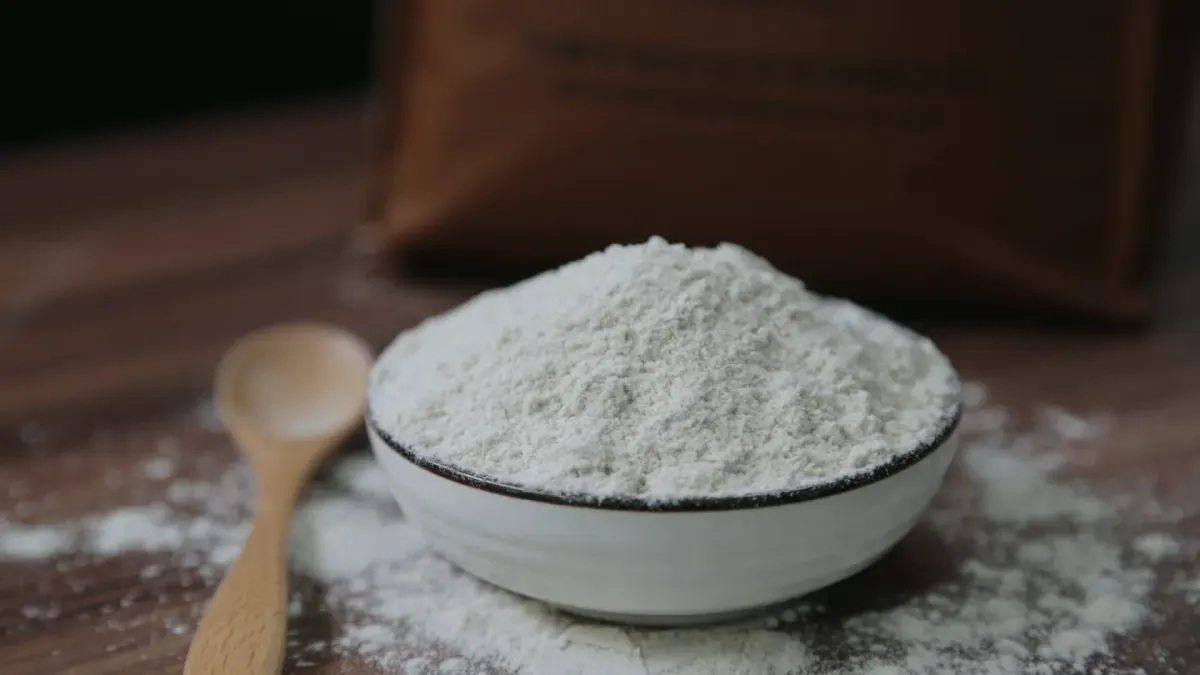
Picture a nine-week-old rescue puppy, still catching up on weight, whose foster owner has just been handed a tub of colostrum powder with a scoop the size of a coffee spoon. The label says a level scoop daily for a dog under twenty pounds. The internet says double it for the first week. The foster owner is standing in the kitchen doing math on a supplement that, as far as she can tell, nobody actually regulates the dose of. That scene repeats itself constantly, and it’s worth sitting with, because the honest answer is that her instinct is right: there isn’t a single verified colostrum dose for dogs to look up. There’s only what a given label says, and what the research behind the ingredient actually tested.
Colostrum is the first milk a mammal produces after birth, dense with immunoglobulins, growth factors, and lactoferrin. Most canine supplements use bovine colostrum, harvested from dairy cows in the first milking after calving. The appeal is straightforward: those immune and gut-supportive compounds don’t disappear just because the species changed. What changes is how much of it a dog actually needs, and that’s where labels start to diverge.
The dose the research actually tested
A frequently cited trial published in the British Journal of Nutrition fed dogs a diet supplemented with spray-dried bovine colostrum at 0.1 percent of the diet over a 40-week period, alongside a canine distemper vaccination. The supplemented dogs showed a significantly higher vaccine-specific antibody response and higher fecal IgA than controls, and their gut microbiota showed greater diversity and stability over the study period. That’s a genuinely useful data point.
It’s also a narrow one. A steady low-level inclusion in the daily diet over ten months is a different exposure than a single scoop stirred into dinner, and it’s a different exposure again from the “loading dose” language you sometimes see on labels, where owners are told to double or quadruple a maintenance amount for a week during illness or stress. That loading-dose convention isn’t disproven by the research — it simply isn’t what the research tested. The mechanism behind colostrum’s benefit is plausible and partly demonstrated; the specific multiplier printed on a label is a manufacturer’s judgment call layered on top of it.

Maintenance versus loading, compared
Most colostrum products on the market split into two dosing philosophies. Maintenance dosing is the smaller, everyday amount — often a fraction of a teaspoon per some increment of body weight, taken daily as a standing gut and immune-support habit. Loading or therapeutic dosing is the larger, short-term amount some brands suggest during a stressful event: travel, a vaccine round, a bout of loose stool, a new environment. The maintenance side has the closer relationship to what’s actually been studied — a steady, modest daily amount sustained over weeks. The loading side leans more on extrapolation: if a little helps, a temporary bump during a known stressor seems reasonable, but it’s an inference from mechanism, not a tested protocol with its own outcome data behind it. Both approaches can be defensible. They are not equally evidence-backed, and a label rarely tells you which one it’s borrowing from.
Consider a senior dog recovering from a rough bout of gastroenteritis, where the owner is choosing between the everyday scoop printed on the tub and a friend’s suggestion to triple it for a week. Neither choice is reckless at ordinary supplement doses — colostrum has a wide margin of safety — but only one of them tracks back to a study design. The steady, modest amount does. The temporary triple dose is a reasonable-sounding guess dressed up as a protocol. That distinction matters more than which number looks more aggressive on paper.
What a bigger scoop doesn’t buy you
Here is where I land, and where I’d ask any manufacturer pushing a large “loading” number to show their work: colostrum’s benefit looks tied to consistency, not concentration. The gut-lining and immune signaling effects described in the research came from steady exposure, not from a spike. That kind of structure-and-function support is defensible when it’s attached to a modest daily habit; it gets shakier the moment it’s stretched to justify quadrupling a scoop during a crisis. I don’t think that stretch is dishonest, exactly. I think it’s untested, and a label should say so rather than imply otherwise.
That’s the same instinct I bring to bodywork and food-first care generally — explain what a tool actually does, then say plainly where that explanation stops covering the recommendation. Colostrum’s mechanism is real. Its dose-response curve past a modest daily amount is not established.
Reading a label without guessing
Because no regulatory body sets a canine colostrum dose, the label is the manufacturer’s product, not a clinical guideline. That makes sourcing and manufacturing quality the more useful thing to scrutinize than the dose itself. The National Animal Supplement Council audits member companies on manufacturing practices, labeling accuracy, and adverse-event reporting — it doesn’t set doses, but it does make a label’s claims more accountable. A company that discloses where its colostrum is sourced and how it’s tested is telling you more than a company that only prints a bigger number on the scoop.
Colostrum sits inside the broader story of a dog’s gut ecosystem, which is worth understanding on its own terms — our guide to dog gut health and digestion covers how fiber, microbes, and the gut lining interact, and our piece on what a healthy dog gut microbiome looks like gives useful context for judging whether any single ingredient, colostrum included, is doing real work.
A maintenance dose, taken consistently, has research behind its mechanism. A loading dose is a reasonable guess wearing a label’s confidence. So when that foster owner in the kitchen puts the scoop back down at the printed amount instead of doubling it, is she settling for less — or is she the one actually following the evidence?
Frequently asked questions
Is there an official colostrum dosage for dogs?
No single regulatory body sets a canine colostrum dose. Manufacturers determine their own dosing, usually scaled by body weight, which is why amounts differ from one product to the next.
Does giving more colostrum work faster or better?
There's no published evidence that exceeding a label's maintenance range produces a proportionally bigger benefit. The research behind colostrum's immune effects used a modest, steady daily inclusion rather than a large one-time dose.
Can I split a colostrum dose into two smaller servings?
Yes. Dividing a daily amount into two servings is a common, reasonable approach, particularly for dogs with sensitive digestion or for products where the full daily scoop is fairly large.
How do I know a colostrum product's dosing is trustworthy?
Look for a manufacturer that discloses sourcing and testing practices, ideally one certified by the National Animal Supplement Council, which audits labeling and manufacturing quality for animal supplements.
Sources
- Supplementation of diets with bovine colostrum influences immune function in dogs — British Journal of Nutrition
- National Animal Supplement Council — National Animal Supplement Council