Yes, dry dog food goes bad, and stale fats can unsettle digestion before you smell trouble.
On this page
Yes, dry dog food goes bad, and the gut often registers the change before your nose does. Once the bag is open, oxygen and warmth start oxidizing fats while any moisture lets mold and storage mites gain ground, which may help explain soft stool or skipped meals in sensitive dogs.
Why kibble is stable until it is not
Extrusion and drying keep unopened kibble shelf-stable for months, but the bag is a pause button rather than a stop sign. Polyunsaturated fats added for nutrition and palatability react with air to form peroxides and aldehydes that taste bitter and sharp. The process is thought to work through gradual lipid oxidation at the kibble surface, which is why a large bag fed slowly to a small dog carries more risk than a small bag used quickly.
The Tips for Safe Handling of Pet Food and Treats from the U.S. Food and Drug Administration recommends storing dry food in its original bag inside a clean container, sealing it after each use, and discarding uneaten food from the bowl. That guidance matters for the microbiome because rancid fat and crumbs left in a warm bowl can shift intake and stool consistency without causing classic vomiting.
What spoilage looks like in the bowl
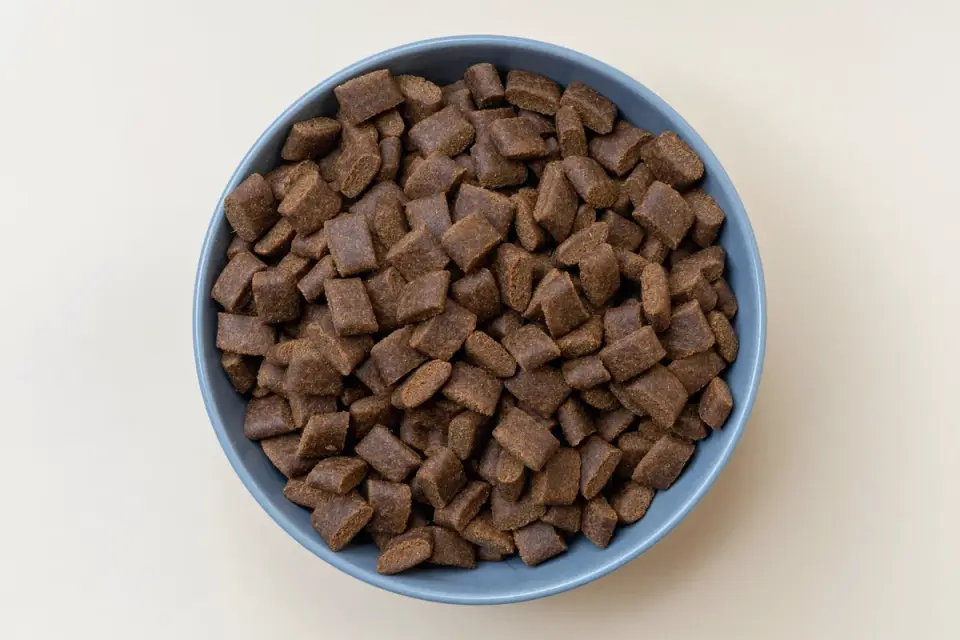
Rancidity rarely announces itself with a strong rotten odor at first. Look instead for a paint-like, cardboard-like or unusually sharp oily smell, yellowing or dusty coating, clumping, visible mold, pantry moths, or a dog that sniffs and walks away from a familiar recipe. A balanced gut microbiome supports overall immune function, and steady intake of fresh, complete food helps maintain that balance better than intermittent exposure to oxidized fats.
Moisture is the second driver. Kibble stored in a garage, near a dishwasher, poured into an unwashed bin, or mixed with wet toppers and left out can pick up enough water activity for mold growth. Some molds can produce aflatoxins under poor storage or manufacturing conditions, and dogs are especially sensitive. Food and Drug Administration describes lethargy, loss of appetite, vomiting, and jaundice as warning signs that warrant prompt veterinary care.
How long an open bag stays fresh
There is no single safe day count because fat level, kibble coating, temperature, and how often the bag opens all matter. As a practical rule from a gut-first view, plan to finish an open bag within four to six weeks, keep it sealed and cool, and buy a bag size your dog can finish in that window. If you are changing recipes or testing tolerance, transition from the fresher bag rather than layering new kibble over stale crumbs, so stool changes reflect the food rather than storage.
For example, Keith in San Antonio noticed his 2-year-old German Shepherd Bing leaving breakfast behind and passing softer evening stools. The bag was six weeks open, stored in a warm laundry room, and the bottom smelled sharper than a fresh bag. Discarding the remainder, cleaning the bin, and starting a smaller fresh bag made intake easier to interpret at the next feeding.
How to store kibble without hurting nutrition
Keep kibble in its original bag, roll the top closed or clip it, then place the whole bag in an airtight bin. Keep the bin in a cool, dry pantry rather than a hot garage, wash and fully dry the bin between bags, and avoid mixing old and new kibble. Check the best-by date at purchase, avoid torn bags or heavy discount bins of unknown age, and throw away food that looks damp, dusty, or infested.
Do not try to rescue musty kibble by heating, rinsing, or mixing it with broth. Pumpkin fiber is a gentle, natural source of both soluble and insoluble fiber, but fiber cannot correct rancid fat or mold, so leave questionable kibble out of homemade mixes too. Readers building balanced homemade diets should apply the same rule to dry ingredients and premixes and store them sealed and cool.
When stale food becomes a vet call
Call your veterinarian if refusal lasts more than a day, if vomiting, diarrhea, itching, or lethargy follows a new or old bag, or if you see mold, insects, or a chemical odor. Bring the bag with lot number and best-by date, note when it was opened and how it was stored, and save a small sample in a sealed bag if advised. Dogs with a history of pancreatitis, liver disease, or food sensitivity deserve a lower threshold for calling because fat quality and mold load may matter more for them.
Frequently asked questions
Does dry dog food go bad after the best-by date?
It can lose freshness and palatability around or after that date, especially once opened. If the bag is past date, smells sharp, or your dog refuses it, replace it rather than pushing through.
Can stale kibble cause diarrhea?
Oxidized fats, crumbs, and moisture-related mold can coincide with soft stool, gas, or skipped meals in sensitive dogs. If signs persist beyond a day or include vomiting or lethargy, contact your veterinarian.
Should I dump kibble straight into a plastic bin?
No. Keep kibble in its original bag inside the bin so the fat barrier and lot information stay intact, then seal the bag between meals and wash the bin between bags.