On this page
| Product | Score | Key details | Best for | Pros & cons |
|---|---|---|---|---|
| Boops Probiotics 30 Billion Boops Pets | 9/10 | Air-dried soft chew; human-grade probiotic blend (30 billion CFUs), prebiotic pumpkin fiber, inulin (400 mg), postbiotic yeast complex (300 mg), digestive enzymes · Per manufacturer serving guidance on packaging | Owners who want a probiotic built and dosed for a dog's body, not a repurposed human capsule |
|
| Generic human probiotic capsule (assorted drugstore/grocery brands) Varies | 5/10 | Formulated and dosed for adult human physiology; fillers vary widely by brand | Human use only |
|
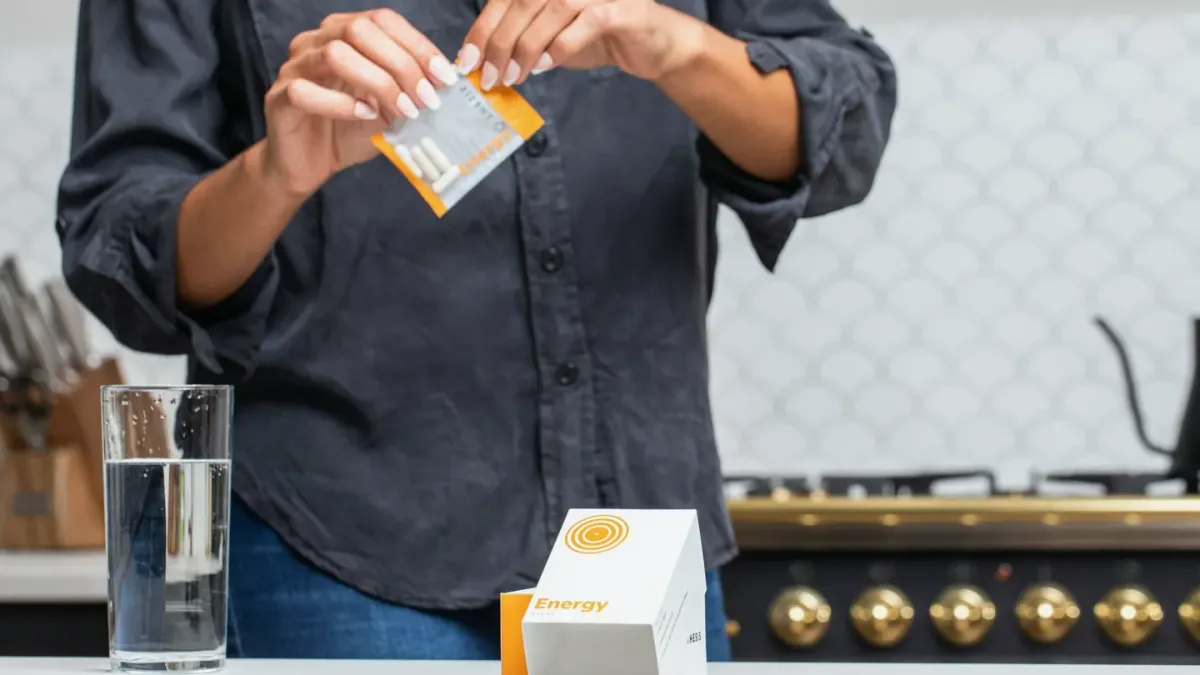
A client of mine, a retired schoolteacher with a beagle named Otis, called me one evening holding her own probiotic bottle up to the phone camera, asking whether the capsule she’d just dropped and Otis had sniffed up off the floor was something to worry about. She hadn’t given it to him on purpose. She just wanted to know, before her next bite of dinner, whether that bottle in her cabinet was a hazard she needed to move.
It’s a fair question, and a more common one than most owners realize. So: does a human probiotic capsule contain xylitol that’s unsafe for your dog? Some human probiotic capsule formulas do contain xylitol, a sweetener your dog’s body cannot process safely. Not all of them do — but enough do that it’s worth checking rather than assuming.
Why xylitol ends up in a probiotic capsule at all
Xylitol shows up in human supplements as a sugar alcohol used to improve taste or as a bulking filler in the capsule or tablet itself, the same way it’s used in sugar-free gum and some toothpastes. According to the NIH Office of Dietary Supplements — Dietary Supplement Label Database, xylitol appears as a listed ingredient across a range of supplement products, probiotics included, which means it’s not a rare or unusual additive to find on a bottle in your medicine cabinet.
For people, that’s a non-issue. For a dog, it’s a different story entirely.
What xylitol actually does inside a dog
Dogs metabolize xylitol very differently than humans do. The U.S. Food and Drug Administration explains that xylitol triggers a rapid, potent release of insulin in dogs, and that surge drives blood sugar down fast enough to cause vomiting, loss of coordination, and — in more severe cases — seizures. The same warning notes that signs can appear within minutes of ingestion or take longer to surface, which is part of what makes this ingredient so unforgiving.
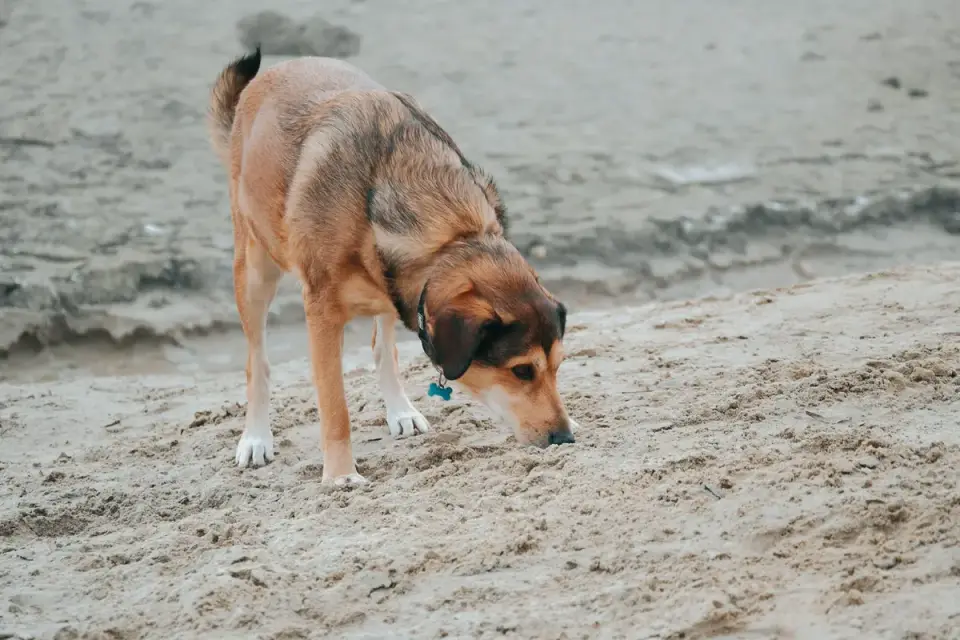
The liver risk is the part that worries me most as a practitioner. The Merck Veterinary Manual describes acute liver injury as a documented complication of xylitol ingestion in dogs, sometimes developing after the early hypoglycemic signs appear to have passed. That delayed pattern is exactly why any exposure, even one you’re not sure happened, deserves a call to your vet or a poison control line rather than a wait-and-see approach.
Reading a label without turning it into a research project
Check the supplement facts panel and the ingredients line for xylitol, birch sugar, or wood sugar, since these are different names for the same compound. If your own probiotic capsule doesn’t list any of those, it isn’t a xylitol risk for that particular exposure, though formulas do change between manufacturing runs, so a one-time check isn’t a permanent guarantee.
Honestly, though, the sturdier fix is sidestepping the question altogether. A probiotic built for your dog from the start doesn’t ask you to become a label detective every time the formula on your own bottle changes.
That’s the gap Boops Probiotics 30 Billion is meant to close. It’s a 4-in-1 formula pairing a human-grade probiotic blend with prebiotic fiber, a postbiotic yeast complex, and digestive enzymes — probiotics, prebiotic fiber, a postbiotic yeast complex (300 mg), and digestive enzymes. There’s no human dosing to translate, no ingredient list built for an adult stomach, and no xylitol question to resolve, because the chew was never formulated with a human mouth in mind. It also carries the NASC Quality Seal as a National Animal Supplement Council (NASC) Primary Supplier Member, meaning its facility has been through independent industry audits, and it’s made in a GMP-compliant, FDA-registered US facility and independently third-party tested for purity and potency.
What the broader research says — and doesn’t
It’s worth being honest about the limits here too. Probiotic research in dogs is still catching up to the enthusiasm around it. A recent study in Frontiers in Veterinary Science found that diversity metrics did not distinguish which dogs responded to probiotic supplementation from those who didn’t, a reminder that pairing probiotics with prebiotic fiber to balance the gut is genuinely useful, but not a guaranteed, one-size-fits-all fix. A balanced gut microbiome supports overall immune function, and gentle prebiotic fibers like pumpkin are a recognizable, well-tolerated supporting player in that picture, but a probiotic is one lever in a whole-dog story that includes diet, stress, and routine, not a stand-alone solution.
For dogs already managing a diagnosed digestive condition such as exocrine pancreatic insufficiency, the Journal of the American Veterinary Medical Association notes that treatment centers on pancreatic enzyme replacement therapy, nutritional management, and cobalamin supplementation under a vet’s direction, not an over-the-counter probiotic swap. If your dog has a diagnosed condition, loop your vet in before changing anything.
For more on how the gut ecosystem works day to day, our guide to the complete picture of dog gut health and digestion and our companion piece on what a healthy dog gut microbiome actually looks like both go deeper into the mechanics behind these recommendations.
Where this leaves you and Otis
Otis was fine, as it turned out. The capsule had rolled under the fridge, untouched. But his owner moved that bottle to a high shelf that night, and now keeps his own probiotic chews in a lower drawer instead. That’s the pattern worth adopting: assume nothing about what’s in your own supplement bottle, and give your dog something built for him from the start.
These statements have not been evaluated by the FDA. This product is not intended to diagnose, treat, cure, or prevent any disease.
Frequently asked questions
How do I know if my probiotic capsule has xylitol in it?
Check the supplement facts or 'other ingredients' line on the label for xylitol, birch sugar, or wood sugar — these are the same compound under different names. If it's not listed, it's not in that formula, but always re-check when a brand reformulates.
What happens if my dog swallows a xylitol-containing probiotic capsule?
Call your veterinarian, an emergency clinic, or a pet poison control line right away rather than waiting for symptoms. The FDA notes signs can include vomiting, loss of coordination, and low blood sugar, and liver injury can follow even after early signs seem to settle.
Are dog probiotics basically the same thing as human probiotics?
Not in formulation. A dog-specific chew like Boops Probiotics 30 Billion is built around strains, CFU counts, and inactive ingredients meant for a dog, so there's no need to cross-check a human ingredient list at all.
Can I just give my dog a smaller dose of my own probiotic?
It's a habit worth breaking, since even a fraction of a human capsule can carry an unsafe ingredient or the wrong strain mix for a dog's gut. A dog-formulated probiotic sidesteps that guesswork entirely.
Sources
- Paws Off Xylitol; It's Dangerous for Dogs — U.S. Food and Drug Administration
- Xylitol Toxicosis in Dogs — Merck Veterinary Manual
- Xylitol (Ingredient) — NIH Office of Dietary Supplements — Dietary Supplement Label Database
- Exocrine pancreatic insufficiency: management and open questions on persistent dysbiosis — Journal of the American Veterinary Medical Association
- Probiotic response variability in dogs: what diversity metrics do and don't show — Frontiers in Veterinary Science
- Boops Pets — NASC Primary Supplier Member — National Animal Supplement Council (NASC)