If your dog suddenly loses use of the back legs, keep him still and get emergency veterinary care now.

On this page
One minute your dog is walking normally and the next the hind legs fold, drag, or will not bear weight at all — that sudden change means the spinal cord, nerves, or blood supply to the hind end may be interrupted, and immediate veterinary assessment gives the best chance to preserve function.
In my integrative practice I read that moment through two lenses at once: in Western terms loss of hind-limb motor function points to cord compression, vascular blockage, or peripheral nerve failure, and in Eastern pattern terms it often looks like sudden Qi and Blood stagnation with Kidney Qi deficiency underlying the back, yet acupuncture, Chinese herbs, food therapy, and Tui-na bodywork all come after stabilization, not before it.
What sudden hind-leg loss often means
The most common urgent causes are intervertebral disc extrusion, fibrocartilaginous embolism, spinal fracture or luxation after trauma, aortic thromboembolism, and tick paralysis or severe polyneuropathy. Disc extrusion is especially familiar in long-backed breeds, which is why I ask owners to review Why Dachshunds Are Prone To Back And Disc Problems once the crisis has passed.
The Merck Veterinary Manual lists spinal cord compression, vascular accidents, and acute disc disease among the key differentials when hind-limb weakness appears suddenly.
What to do in the first 30 minutes
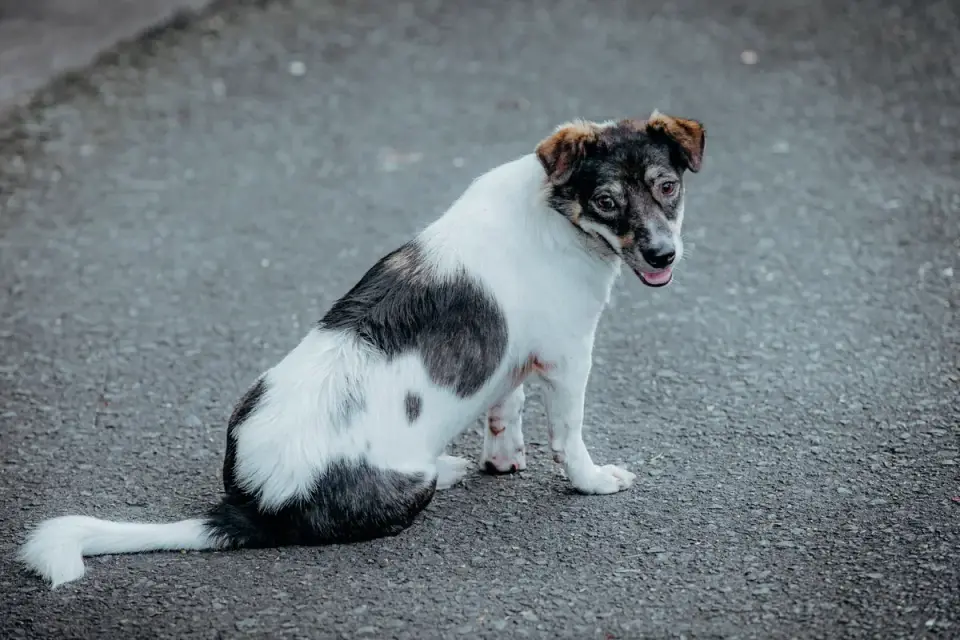
Keep handling to a minimum. Carry a small dog to the car on a firm board or folded blanket, and for a large dog slide a blanket underneath as a sling and guide rather than lift. Do not twist the back, do not encourage walking to test it, and do not give human pain drugs.
Note the exact time signs started, whether there was yelping, falling, rough play, or chewing ticks found, whether the dog can urinate, feel a toe pinch, wag, or stand with support, and whether the legs feel cold, warm, painful, or numb. That timeline helps the emergency team separate surgical compression from vascular or tick-related causes.
Call ahead so the clinic can prepare for triage, radiographs or advanced imaging, and neurologic testing. Transport on a non-slip surface with the spine straight.
What the vet will check right away
Expect a neurologic exam for deep pain perception, reflexes, anal tone, and bladder control, plus pain localization along the spine. X-rays screen for fracture or luxation, while MRI or CT identifies disc material, hemorrhage, tumor, or infarct when referral is available. Bloodwork, blood pressure, and tick screening fill out the picture when clot or paralysis is suspected.
Time matters because prolonged compression reduces the odds of full recovery, and loss of deep pain perception is treated as a surgical emergency where referral is possible. Your job is not to diagnose at home, but to preserve the window for diagnosis.
After the emergency plan is set
Once the veterinarian has stabilized the spine, restored perfusion, or started tick removal and supportive care, recovery becomes one integrative plan: rest and controlled confinement to protect healing tissue, acupuncture to may help support circulation and nerve signaling, a Blood-nourishing herbal and food-therapy strategy tailored to the pattern, and gentle Tui-na bodywork to may help support muscle tone and joint range as function returns.
Weight control, non-slip footing, and restricted jumping matter as much as any supplement. When you return home, set up a single-floor pen and review Ramps and Stairs to Protect a Dachshund’s Back at Home and Are Ramps Better Than Stairs for Sore Joints? before allowing stairs or furniture access again.
Call back the same day if breathing changes, vocalizing worsens, bladder control is lost, the legs become cold or swollen, or a previously responsive dog becomes dull or unable to rest comfortably.
Frequently asked questions
Should I wait to see if my dog's back legs get better on their own?
No. Sudden inability to stand or walk on the hind legs should be treated as an emergency and examined the same day, because compression, clot, or injury can worsen quickly.
Can I give aspirin or ibuprofen while heading to the vet?
No. Human NSAIDs can cause stomach ulceration, kidney injury, and bleeding, and they can interfere with safe prescription pain control. Keep the dog still and transport promptly.