Picture a five-year-old beagle mix whose owner has just switched foods twice in three months, chasing a stool that won’t quite firm up. The vet visit rules out parasites, the fecal panel comes back unremarkable, and the owner leaves with a reasonable but frustratingly vague instruction: add some fiber, see if it helps. That’s the moment most owners meet prebiotic fiber for the first time — not as a wellness trend, but as a low-risk thing to try before reaching for anything stronger. It’s a sensible instinct. It’s also where a lot of owners get the dose wrong in either direction, either giving too little to matter or enough to trade one stool problem for another.
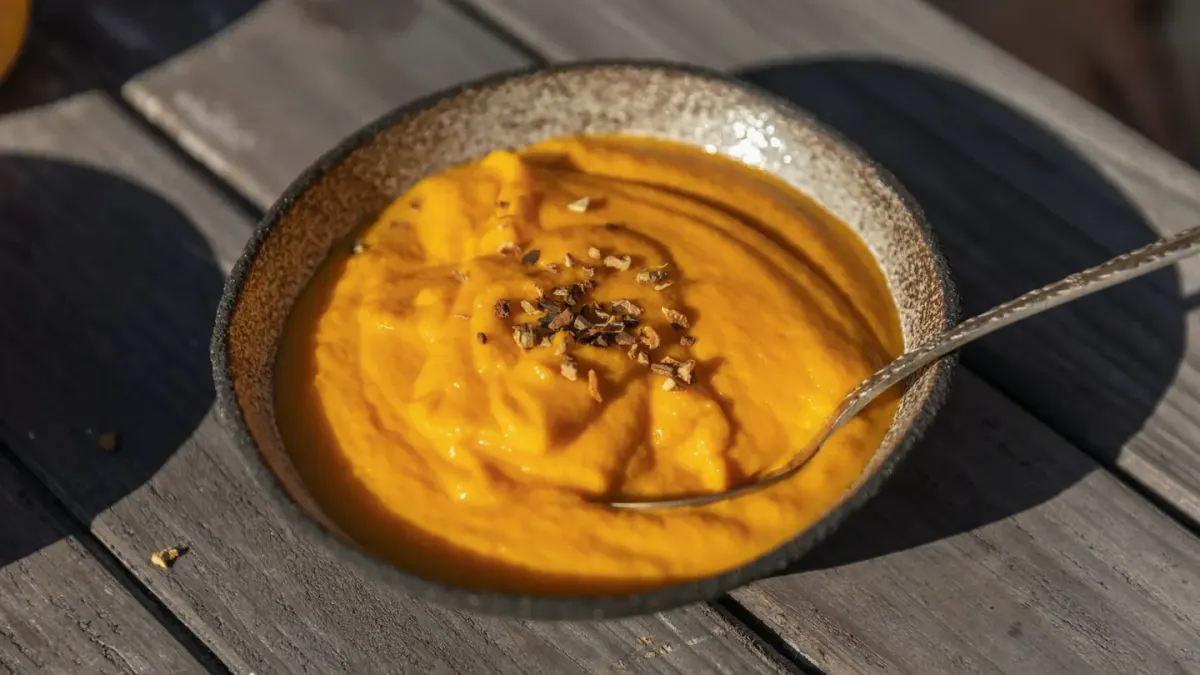
Prebiotic fiber is a category, not a single ingredient, and the three names in this topic — pumpkin, inulin, and fructooligosaccharides (FOS) — sit in different corners of it. Pumpkin is a whole food: canned pumpkin contributes a mix of soluble and insoluble fiber along with water, beta-carotene, and bulk. Inulin and FOS, by contrast, are purified, extracted carbohydrates — usually from chicory root — added specifically because colonic bacteria ferment them efficiently. Both categories can act as prebiotics, meaning they selectively feed bacteria already living in the colon rather than introducing new organisms the way a probiotic does. For readers who want the fuller mechanism, our guide on what a healthy dog gut microbiome looks like lays out what that fermentation process is actually doing downstream.

The dog research on fermentable fiber is more consistent than a lot of gut-health topics I cover. Studies feeding FOS and inulin to healthy dogs have tracked shifts in fecal bacterial populations and short-chain fatty acid concentrations using DNA sequencing, and a PeerJ: Fecal Microbiota in Cats and Dogs During FOS and Inulin Supplementation study is one of the clearer examples — it used high-throughput sequencing to document measurable changes in the fecal microbiota of healthy dogs and cats over a supplementation period. Separately, a prebiotic fiber blend fed to senior dogs was described in Animals (MDPI): A Novel Prebiotic Fibre Blend Supports the Gastrointestinal Health of Senior Dogs, which found the intended pH and digestive changes but not a statistically significant rise in short-chain fatty acids — a reminder that fermentation happening in a lab assay doesn’t always translate into a clean clinical signal in every study population.
Consider a senior Labrador on a joint-support routine whose owner wants to add pumpkin “just in case” it helps loose stool that shows up a few times a month. That’s a reasonable low-risk experiment, and it’s also exactly the kind of case where I tell owners to separate what fiber is likely doing — gently bulking stool and feeding beneficial bacteria — from what it can’t do, which is diagnose or fix a structural or inflammatory reason for chronic loose stool. If the pattern persists past a couple of weeks of a modest, consistent fiber addition, that’s a workup conversation, not a bigger scoop of pumpkin. Our complete guide to dog gut health and digestion walks through when loose stool crosses from a diet tweak into a vet visit.
Where the evidence gets genuinely thin is in predicting which dog benefits and by how much. A recent study on probiotic-supplemented dogs found that diversity metrics did not distinguish non-responders from responders, according to a study in Frontiers in Veterinary Science: Diversity Metrics and Probiotic Responder Status in Dogs — meaning even sophisticated sequencing couldn’t reliably predict who’d improve. That finding is about probiotics specifically, but it captures a broader honesty the field owes owners: we can measure that the bacterial population shifted; we’re much weaker at predicting which individual dog will show a clinical improvement worth noticing. Dogs recovering from exocrine pancreatic insufficiency show a related pattern — that condition is treated with enzyme replacement, low-residue diets, and cobalamin support, as described in Nutritional Management of Exocrine Pancreatic Insufficiency in Dogs, and the same review notes that persistent dysbiosis after treatment starts isn’t yet well understood. Fiber isn’t a fix for that kind of disease; it’s a supportive layer at most, and I’d rather owners know that upfront than discover it after months of tinkering.
Safety is mostly a dosing problem, not an ingredient problem. Fermentable fiber that outpaces what the colon can process shows up as gas, bloating, or looser stool — the same signs owners are often trying to fix in the first place — and a Dietary Fiber in the Management of Canine and Feline Gastrointestinal Disease review situates fiber as one tool among several in managing GI disease, not a standalone therapy. Practically: start small, hold the dose steady for several days, and judge by stool consistency and energy, not by how virtuous the ingredient sounds on a label.
Here’s the bottom line I keep coming back to with owners: pumpkin, inulin, and FOS are legitimate, low-cost tools for nudging a dog’s gut bacteria in a favorable direction, but they support digestive wellness — they don’t replace medicine, and they don’t diagnose why a dog’s stool is inconsistent in the first place. I’d rather a client start with a spoonful of plain canned pumpkin, watch for three days, and loop in their vet if nothing changes than chase a bigger dose hoping it works harder.
Frequently asked questions
Is pumpkin the same thing as inulin or FOS?
No. Pumpkin is a whole-food fiber source that contributes both soluble and insoluble fiber, while inulin and fructooligosaccharides (FOS) are purified fermentable fibers, often extracted from chicory root, added specifically to feed colonic bacteria. Pumpkin brings some of that same fermentable fraction along with bulk fiber; inulin and FOS are more concentrated and more predictably fermentable.
How much pumpkin can I give my dog?
There's no single dog-tested dose that fits every size and gut, which is exactly why I'd start low — a spoonful for a small dog, a couple tablespoons for a large one — and watch stool for two or three days before adjusting.
Can too much prebiotic fiber hurt my dog?
Yes, functionally. Over-supplying any fermentable fiber can produce gas, bloating, or diarrhea as gut bacteria ferment more substrate than the colon can comfortably handle, and it can dilute a diet's nutrient density if it replaces actual food. This is a dosing problem, not a reason to avoid fiber altogether.
Does prebiotic fiber replace a probiotic?
No — they do different jobs. A probiotic supplies live organisms; a prebiotic feeds the organisms already living in the colon, including any probiotic strains that colonize. Some products combine both, which is a reasonable structure/function approach, but neither is a substitute for veterinary diagnosis and treatment of an underlying GI disease.
Sources
- Nutritional Management of Exocrine Pancreatic Insufficiency in Dogs — JAVMA
- Diversity Metrics and Probiotic Responder Status in Dogs — Frontiers in Veterinary Science
- Fecal Microbiota in Cats and Dogs During FOS and Inulin Supplementation — PeerJ
- A Novel Prebiotic Fibre Blend Supports the Gastrointestinal Health of Senior Dogs — Animals (MDPI)
- Dietary Fiber in the Management of Canine and Feline Gastrointestinal Disease — JAVMA