Picture a middle-aged beagle mix who does fine on her usual kibble until the household switches bags mid-month. Two days later she’s hunched after meals, her stool has gone soft and mucus-flecked, and her owner is standing in the pantry googling home remedies before committing to an emergency visit. This is the scenario that pulls slippery elm bark powder off a lot of kitchen shelves — a mild, food-adjacent irritation, not a dog who’s acutely ill. It’s also exactly the kind of case where I reach for both the imaging study and the acupuncture needle: I want the diagnostic picture ruled clean before I lean on a botanical, and I want the botanical chosen for a mechanism I can actually defend, not just tradition.
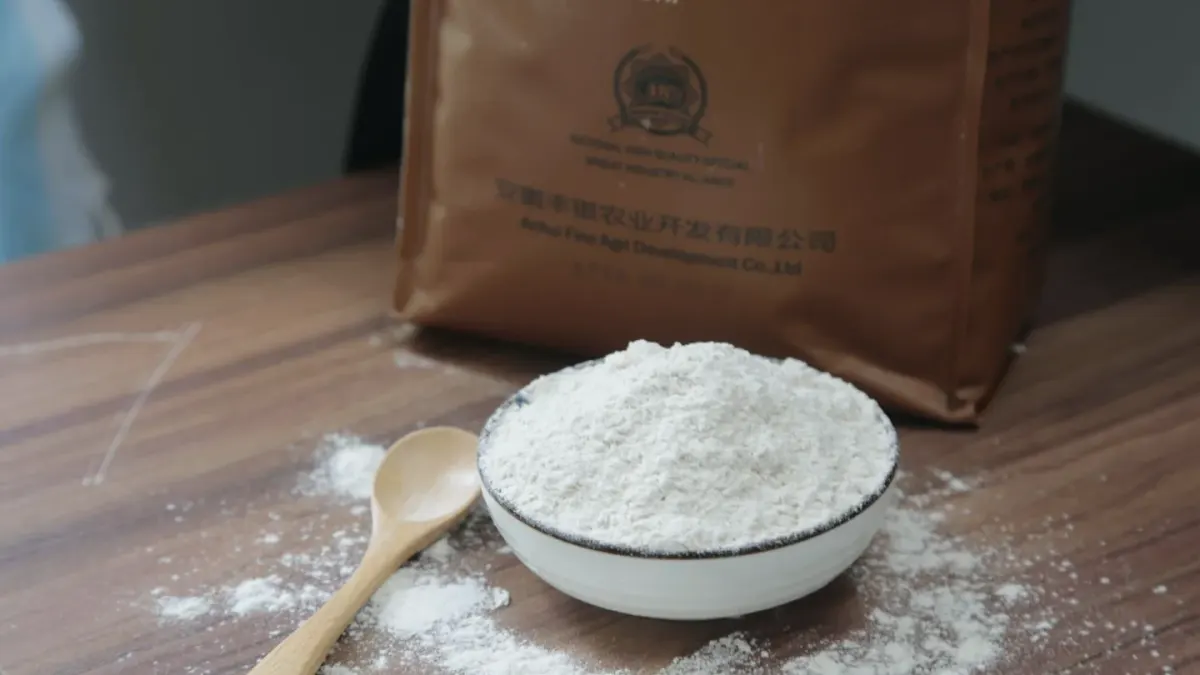
Slippery elm (Ulmus rubra) is a demulcent. Ground the inner bark into powder, mix it with cold water, and the resulting slurry forms a viscous gel rich in mucilage polysaccharides. According to ThorneVet, the mucilage “acts as a demulcent, creating a protective barrier over inflamed tissues in the digestive and respiratory systems,” and the bark also carries mild astringent tannins credited with toning tissue and reducing inflammation. That’s a mechanistically coherent story for why a dog with reflux, mild colitis, or diarrhea-related irritation might settle down after a dose — the gel physically buffers mucosa that’s already inflamed, buying it time to heal rather than actively curing anything underneath.

Here is where the dosing question actually lives, and where owners get the least reliable information. Herbal and integrative sources converge on a rough convention: about one-quarter teaspoon of bark powder per ten pounds of body weight, mixed into a slurry and given once or twice a day, for a few days at a time. That convention is consistent across independent sources, which is reassuring, but consistency across blogs and herbalist guides is not the same as confirmation in a controlled canine trial. Nobody has run the dose-ranging study that would tell us whether a quarter-teaspoon-per-ten-pounds slurry outperforms a smaller or larger amount, or whether powder concentration varies enough between brands to make a flat rule unreliable. I treat the convention as a reasonable floor to discuss with a vet, not a number to follow blind.
That gap matters more once you set slippery elm next to conditions where dosing actually has evidence behind it. Exocrine pancreatic insufficiency is a useful contrast case: the disease is managed with pancreatic enzyme replacement therapy, a low-residue moderate-fat diet, and cobalamin supplementation — a defined protocol, not a folk convention, according to a JAVMA review of the condition. Even there, the same review notes that persistent gut dysbiosis after enzyme therapy starts is still poorly understood, and more work is needed to know how to correct it. If a field with an actual treatment protocol still has open dosing and dysbiosis questions, a demulcent bark with no canine dose-ranging trial deserves proportionate humility, not false precision.
Probiotics sit in a similar middle ground. A recent randomized trial reported in Frontiers in Veterinary Science found that diversity metrics — the usual proxy for “a healthier microbiome” — did not distinguish which dogs responded to a probiotic from which didn’t. That’s a sobering result for anyone assuming a supplement’s effect can be predicted from a stool test. It reinforces the same lesson slippery elm teaches from the other direction: mechanism and plausibility are not the same as a demonstrated clinical outcome, and both deserve to be labeled honestly. For a broader map of how fiber, probiotics, and enzymes fit together across a dog’s digestive tract, see The Complete Guide to Dog Gut Health and Digestion.
Short version: plausibility isn’t proof.
A year into managing her own dog’s sensitive stomach, one longtime foster caregiver I’ve corresponded with settled on a rule that mirrors good clinical practice: slippery elm goes in the cabinet for flare days, not the daily bowl. She doses a slurry for two or three days when stool turns soft, watches for improvement, and calls her vet if things don’t settle, rather than layering it in indefinitely as a preventive. It’s a longer story than it sounds — she’d tried a rotating cast of toppers and treats first, chasing whatever the internet swore by that week, before landing on a plan built around watching the dog rather than the supplement aisle. That’s the right instinct. A demulcent that soothes irritated tissue is a reasonable bridge while you figure out what’s actually driving the irritation; it is a poor substitute for figuring that out.
Safety is mostly about timing and context, not toxicity. Slippery elm’s mucilage coats the gut lining well enough that it can also blunt absorption of anything else taken by mouth — spacing it at least two hours from other medications is the standard caution, and it matters most for drugs with a narrow therapeutic window, like thyroid hormone. Dogs with a suspected bowel obstruction shouldn’t get any oral demulcent, mucilage included, until that’s ruled out. And a dog on other prescribed medications, or with diabetes, should only get slippery elm added under a vet’s direction, since the absorption effect can complicate dosing of drugs that are already being carefully titrated.
So where does that leave a reasonably attentive owner standing in the pantry? Start with a vet call, not a supplement aisle, if signs are new, severe, or recurring. If a vet is comfortable with a short trial, the quarter-teaspoon-per-ten-pounds slurry, given for a few days and reassessed, is a defensible, low-risk starting point, understood as a bridge, not a diagnosis. For a fuller picture of what a well-functioning gut looks like before you decide a bark powder is even the right tool, read What a Healthy Dog Gut Microbiome Looks Like first. The research on slippery elm itself will likely stay thin for a while yet. What shouldn’t stay thin is the habit of pairing a plausible mechanism with an honest look at what’s actually been tested — the same habit that has me reaching for both the imaging study and the acupuncture needle before I commit to either one.
Frequently asked questions
Can slippery elm replace a probiotic or digestive enzyme for my dog?
No. Slippery elm's mucilage is thought to coat and soothe tissue; it doesn't repopulate bacterial populations the way a probiotic does or replace missing pancreatic enzymes. In dogs with exocrine pancreatic insufficiency, the standard of care is enzyme replacement, dietary management, and cobalamin supplementation, not an herbal demulcent.
How long can I give slippery elm before checking back in with my vet?
Treat it as a short-term, symptom-driven tool — a few days to about two weeks — and loop your vet in if soft stool, vomiting, or reflux persists past that window, since ongoing GI signs deserve a diagnosis, not a longer supplement course.
Sources
- Slippery Elm Bark (Ulmus rubra) — ThorneVet
- Exocrine Pancreatic Insufficiency Management Review — JAVMA
- Probiotic Response and Microbiome Diversity in Dogs — Frontiers in Veterinary Science