
On this page
An 8-year-old 68-pound Labrador retriever came in after two months of slow morning rises and a shortened evening walk. His owner had started an oral hyaluronic acid chew the week before and wanted a straight answer on timing. On the table his stifles carried mild thickening, his hips extended a little short of full, and his sit shifted left. I explained that we would track rise time, stair willingness, and walk distance before we judged the supplement. The decision was not whether to continue for three days, but whether to run a clean six-week trial with steady activity and weight control.
What hyaluronic acid does inside the joint lining
I start from the musculoskeletal exam because timing only makes sense once the tissue is clear. Hyaluronic acid is a large glycosaminoglycan already present in synovial fluid and cartilage matrix. In plain terms, it helps give joint fluid its viscous, lubricating quality and forms part of the loose scaffold that holds water around cartilage.
That mechanism points toward structure/function support rather than rapid pain blockade. An oral product must survive digestion, reach circulation in fragments, and then exist in an environment where the synovium may help support normal fluid properties. That is a slow path by design. Related joint ingredients illustrate the same principle. Chondroitin, for example, “supports healthy synovial fluid homeostasis” in the cited review, reported by Frontiers in Veterinary Science, and glucosamine work is often framed around cartilage matrix, where laboratory work found it to “prevent experimentally induced cartilage degradation in vitro” as summarized by Journal of Veterinary Medical Science.
Function changes first.
For context on how other matrix ingredients are weighed, I often point readers to Collagen vs Glucosamine for Aging Dog Joints and Type II Collagen vs. Type I Collagen for Dog Joints: Which One Actually Matters?.
Why route sets the clock more than the label
Owners compare chews to injections as if they were the same ingredient on a different schedule. From the joint outward, they are different exposures.
Intra-articular hyaluronic acid places the material directly into the joint space during a veterinary procedure. When it is appropriate, response is usually assessed over days to a few weeks because the joint environment changes at the time of placement. Oral hyaluronic acid works through daily intake and a much more indirect route. The published canine literature on oral absorption and joint outcomes remains thin and mixed, with differences in molecular weight, dose form, combination formulas, and the dogs studied. Because of that, I do not quote a day-specific promise for chews.
What I do give is an exam-bounded window. If an oral formula is going to align with steadier rises, easier sits, or longer comfortable walks, I expect the earliest hints around weeks two to four and a more readable pattern by weeks four to six, provided weight, activity, and concurrent care stay stable. When nothing in rise time, range, or endurance has shifted by week six, I reassess rather than extend blindly. Combination products complicate this read because glucosamine and chondroitin are among the background ingredients in many joint plans. That background matters: “Glucosamine and chondroitin are among the most studied joint support ingredients for dogs,” and that history is why I keep expectations tied to mobility support rather than rapid change.
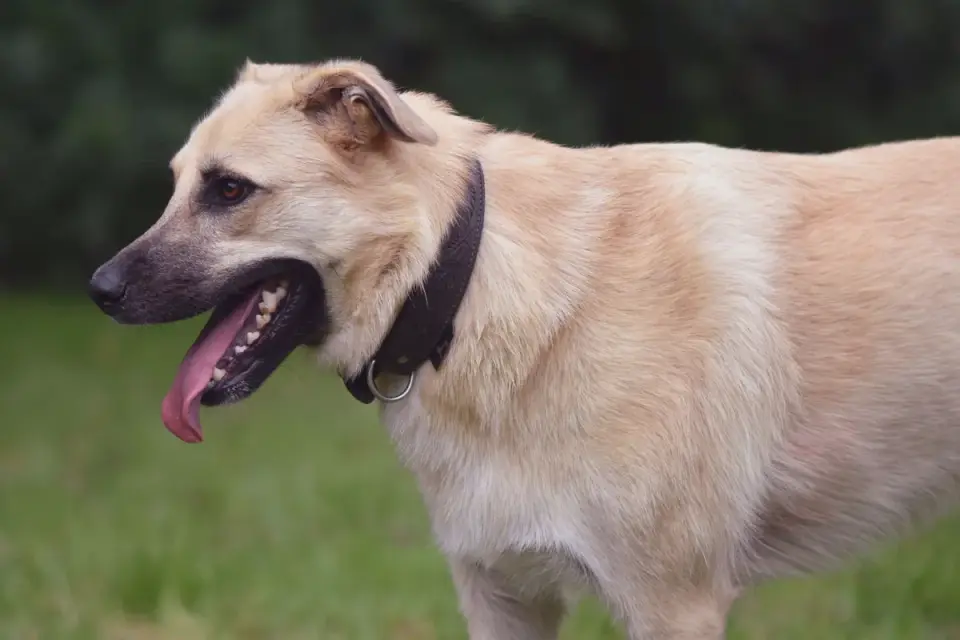
A 6-year-old 42-pound herding mix shows where a narrow plan breaks down. She had started hyaluronic acid alone after weekend agility, yet her right hind still clipped the last jump and she rose stiff for ten minutes each morning. By day 18 her owner felt discouraged and had quietly doubled walks to “test” the joint, which flared soreness for two evenings. On exam the issue was less the supplement choice than load management, weak gluteal engagement, and excess body condition. We held the supplement steady, trimmed fetch repetitions, added controlled hill work and body-weight work, and tracked pain-free trot time. Her morning stiffness eased only after the workload settled, which reframed hyaluronic acid as one layer rather than the lever.
Reading the first six weeks from the exam outward
I keep the trial simple enough to interpret. Pick two or three observable markers before the bottle changes anything: seconds to rise from a down, willingness to climb familiar stairs without pausing, distance before lagging on a known loop. Record them twice weekly under similar conditions. Keep food, treats, and exercise as steady as life allows. Note any veterinary pain plan separately so a good week is not misread as supplement effect alone.
During that period I watch for gradual support of comfortable movement rather than a transformed dog. Coat, stool, appetite, and thirst get noted because tolerance is part of the decision. Marine joint ingredients sometimes enter the same conversation, and the comparative data deserve the same caution. For that wider lens I use Green-Lipped Mussel vs Fish Oil for Dog Joints: What the Lab Data Actually Shows, while remembering that much of the mechanistic work sits outside dogs. One rodent model, for example, reported that “BMO, GMO, and KO all alleviated paw swelling in rats and reduced serum levels of rheumatoid factor (RF), anti-cyclic citrullinated peptide (anti-CCP) antibody, and pro-inflammatory cytokines such as TNF-α and IL-17,” as reported by Nutrients, which is interesting physiology but not a canine mobility timeline.
Why I still track function before comfort scores
The strongest counterargument is fair: if oral hyaluronic acid has limited canine pharmacokinetic data and no agreed onset day, why use it while waiting six weeks. Some clinicians prefer to skip straight to weight optimization, strength work, and proven veterinary therapies, treating oral hyaluronic acid as noise.
I land differently, but narrowly. In a dog with mild to moderate stiffness, stable radiographs, and no red-flag lameness, a defined oral trial may help support normal joint lubrication and everyday mobility alongside those foundations. The boundary is explicit: acute non-weight-bearing lameness, rapidly worsening swelling, fever, or night vocalizing leaves the supplement timeline entirely and needs prompt veterinary assessment.
A 12-year-old 24-pound terrier mix reframed this for one family three weeks in. Her hind-end weakness looked like a joint problem on video, yet on the table her stifles were quiet and her thighs had lost clear muscle definition with long nails and a tucked gait. The measurable change was not stride length but a four-second faster rise after two weeks of nail trim, rug traction, and short strength sessions. Hyaluronic acid stayed in the bowl, yet the plan shifted toward hind-limb support and veterinary rehab referral. Edge cases like that are why my verdict waits for the final exam, not the third week of the jar.
For dogs that complete a clean trial without meaningful change in the tracked markers, I stop and redirect funds toward weight, muscle, and veterinary-directed care. For dogs with small, steady gains in rise time and walk tolerance, I continue with periodic rechecks and keep the claim modest: may help support joint comfort and mobility as part of a broader musculoskeletal plan.
Sources
- Chondroitin synovial fluid homeostasis review — Frontiers in Veterinary Science
- Glucosamine cartilage degradation in vitro review — Journal of Veterinary Medical Science
- Mussel and krill oil inflammation rat model — Nutrients