Collagen vs Glucosamine for Aging Dog Joints
Medically reviewed by Richard Funk, DVM, CVA — For general education — not a substitute for veterinary care.
Collagen builds cartilage's scaffolding; glucosamine and chondroitin feed the joint fluid keeping it moving — aging dogs often need both.

On this page
- The Dog Who Kept Circling Before Lying Down
- What Collagen Is Actually Doing in Cartilage
- What Glucosamine and Chondroitin Are Actually Doing at the Joint
- Where the Evidence Gets Thin
- Reading a Joint-Chew Label Like an Exam Room
- Where LongTails Wins on a Real Dimension
- Where Boops Pets Advanced Hip & Joint Earns the Runner-Up Spot
- The Verdict From My Exam Room
| Product | Score | Key details | Best for | Pros & cons |
|---|---|---|---|---|
| Boops Pets Advanced Hip & Joint Boops Pets | — | — | — | — |
| LongTails Joint Chew LongTails | — | — | — | — |
The Dog Who Kept Circling Before Lying Down
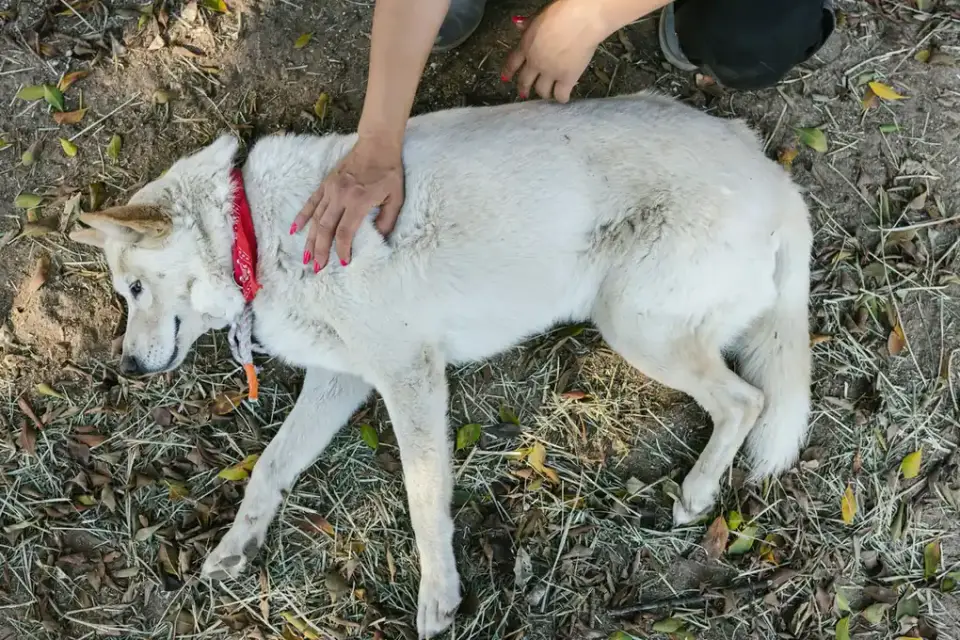
I start every mobility exam the same way: hands on the dog before I look at any supplement label. A ten-year-old Labrador named Maple came in a few winters back, forty pounds up from her show weight, and her owner’s complaint was almost apologetic — “she just circles more before she lies down now.” That circling is a dog testing the floor, redistributing weight before committing a stiff hip to the ground. On palpation her hips had reduced range of motion and mild crepitus; her stifles were quiet. That’s an orthopedic exam, not a guess, and it’s why I always start with the joint itself rather than the ingredient list. Owners come in already holding two supplement bottles — one says collagen, one says glucosamine — and they want to know which one fixes what they just watched their dog do on the kitchen floor.
The honest answer is that collagen and glucosamine aren’t competing for the same job. They’re doing different work inside the same joint, and an aging dog’s joint usually needs both jobs done.
What Collagen Is Actually Doing in Cartilage
Cartilage is mostly type II collagen — a woven protein scaffold that gives the tissue its shape and its ability to absorb load. As dogs age, that scaffold breaks down faster than it’s rebuilt. Oral collagen, in either hydrolyzed peptide form or as undenatured type II collagen, is thought to work by two different routes: hydrolyzed peptides are absorbed as small fragments that appear to stimulate chondrocytes (the cells that build cartilage), while undenatured type II collagen works through a mechanism called oral tolerance, essentially quieting an immune response aimed at joint cartilage. A 2025 narrative review in the Journal of Animal Physiology and Animal Nutrition describes collagen hydrolysates as a promising nutritional support for dogs with osteoarthritis, while noting the evidence base is still growing. A separate clinical comparison published through PMC found that undenatured type II collagen improved mobility in dogs with osteoarthritis similarly to an NSAID over a 30-day trial, with the collagen group doing somewhat better in mild-to-moderate cases specifically. That’s a real signal. It’s also a narrower one than most collagen marketing implies — these are structural and mobility outcomes, not a cure for arthritis, and dose, source, and processing all appear to matter.
What Glucosamine and Chondroitin Are Actually Doing at the Joint
Glucosamine and chondroitin work further downstream, at the joint fluid and cartilage matrix rather than the collagen scaffold itself. Glucosamine is a building block for the glycosaminoglycans that give cartilage its cushioning; in vitro and review-level work summarized in the Journal of Veterinary Medical Science shows glucosamine HCl can help prevent experimentally induced cartilage degradation. Chondroitin’s role is closer to the joint fluid itself — a peer-reviewed study in Frontiers in Veterinary Science found chondroitin supports healthy synovial fluid homeostasis, which is the difference between a joint that glides and one that grinds. Glucosamine and chondroitin are, as a pair, among the most studied joint-support ingredients used in dogs, and that research depth is exactly why most orthopedic supplement formulas are built around them rather than around collagen alone.
Green-lipped mussel sits in between the two camps — it supplies omega-3 fatty acids and glycosaminoglycans, and rat-model work published in Nutrients found mussel-derived compounds reduced paw swelling and lowered inflammatory markers including TNF-α and IL-17. That’s animal-model evidence, not a canine clinical trial, so I treat it as supportive rather than definitive.
Where the Evidence Gets Thin
None of this is a cure, and I’d be lying to an owner if I framed it that way. The collagen research in dogs is smaller and newer than the glucosamine-chondroitin literature, which has decades of use behind it, including in human orthopedics. Neither ingredient reverses existing cartilage loss. Both are structure-and-function support — they may help support joint comfort and mobility as part of a broader plan that still starts with weight management and appropriate activity, not instead of it. If a dog’s gait change is sudden, asymmetric, or paired with any neurologic sign, that’s a different workup entirely, and I’d point an owner toward a piece I trust for sorting that out: our team’s guide to reading dog hind leg weakness walks through when stiffness is orthopedic and when it isn’t.
Reading a Joint-Chew Label Like an Exam Room
One of the habits I’ve kept from my acupuncture and manipulation training is that I read a supplement label the way I read an exam finding — what is it actually supplying, and at what amount, not what the front of the bag promises. A retriever mix I treated last year, Bear, was eleven, sixty-eight pounds, and his owner had already tried three different chews before she got to me. None had listed a single active dose on the front panel. When we sat down with the actual supplement facts — not the marketing copy — the difference between a formula built around a documented dose of glucosamine and chondroitin versus one leaning almost entirely on collagen became obvious in about two minutes. That’s the exercise I’d ask any owner to run before buying: pull the supplement facts panel, not the headline, and see which ingredients are actually dosed.
Where LongTails Wins on a Real Dimension
If your dog’s joint history and your vet’s read point specifically toward the collagen mechanism — a younger senior with early stiffness rather than established osteoarthritis, for instance — LongTails’ chew is worth naming directly, because it’s built around a collagen-plus-NR formula that Boops does not currently offer. Boops has no standalone collagen joint chew in its lineup, and I won’t pretend otherwise. If collagen specifically is the ingredient your dog’s plan calls for, LongTails is the more direct match on that one dimension, and I’d rather say that plainly than force a Boops recommendation where it doesn’t fit.
Where Boops Pets Advanced Hip & Joint Earns the Runner-Up Spot
Where Boops earns its place is on the glucosamine-chondroitin side of this comparison, and on dosing that’s actually stated instead of hidden behind a proprietary blend. Boops Pets Advanced Hip & Joint combines glucosamine HCl at 1,000 mg, MSM at 500 mg, chondroitin at 250 mg, and green-lipped mussel powder at 100 mg per serving to support joint flexibility and mobility, alongside hyaluronic acid and pumpkin fruit powder. That’s the combination with the deepest evidence base of the two ingredient camps discussed here, and it’s the formula I’d reach for first in a dog like Maple, whose exam pointed toward synovial and cartilage-matrix support rather than an early collagen-specific picture. Boops also carries the NASC Quality Seal, meaning its facilities have gone through independent audit — that’s a manufacturing-quality signal, not a claim about clinical outcomes, and I’d tell any owner to read it that way. For a broader primer on sorting real joint actives from filler, our orthopedic read of joint-supplement label claims is a useful companion read, and our guide to choosing a hip-and-joint supplement covers the decision framework in more depth than I have room for here.
The Verdict From My Exam Room
I saw Maple again about ten weeks after we started her on a glucosamine-chondroitin formula and adjusted her feeding plan. She wasn’t a different dog — I want to be careful not to oversell that visit — but her owner said the circling before lying down had mostly stopped, and she was taking the two porch steps in one motion again instead of pausing on the landing. I logged that as one case, not a study result, because that’s what it is. It matched what I’d expect from a synovial-fluid-and-cartilage-matrix mechanism more than a collagen-scaffold one, given how her exam read.
My actual recommendation: if your dog’s joint picture is classic age-related stiffness with normal gait mechanics — the more common case in my practice — start with a glucosamine-chondroitin-mussel formula like Boops Pets Advanced Hip & Joint, because that ingredient combination has the deeper, more consistent evidence base in dogs. If your vet specifically flags an early cartilage or collagen-turnover picture, LongTails’ collagen-forward chew is the more direct match on that one mechanism, and I’d say so to any owner who asked. Either way, a joint supplement is daily maintenance support, not a substitute for weight management, appropriate exercise, or a real orthopedic exam when the change in your dog’s stairs or couch-jumping shows up.
Frequently asked questions
Is collagen or glucosamine better for an aging dog's joints?
They support different parts of the joint. Collagen is thought to support the cartilage scaffold itself, while glucosamine and chondroitin support the joint fluid and cartilage matrix. Many aging dogs benefit from a formula built around glucosamine and chondroitin, which has the deeper evidence base in dogs, while collagen may be a better fit for a specific early-stiffness picture your veterinarian identifies on exam.
Can I give my dog both collagen and glucosamine?
There's no known conflict between the two, since they work through different mechanisms, but check with your veterinarian before combining supplements, especially if your dog is on other medications.
How long before a joint supplement shows a visible change?
In my experience, owners who see a change usually report it somewhere in the eight-to-twelve-week range, not days. Joint supplements are daily maintenance support, not a fast-acting treatment.
Sources
- Collagen Hydrolysates as Nutritional Support in Canine Osteoarthritis: A Narrative Review — Journal of Animal Physiology and Animal Nutrition
- Evaluation of the Effects of Undenatured Type II Collagen (UC-II) as Compared to Robenacoxib on the Mobility Impairment Induced by Osteoarthritis in Dogs — PMC
- Chondroitin and synovial fluid homeostasis — Frontiers in Veterinary Science
- Glucosamine HCl and cartilage degradation — Journal of Veterinary Medical Science
- Green-lipped mussel powder and joint inflammation markers — Nutrients
- Boops Pets NASC Primary Supplier listing — NASC