
On this page
Early cognitive change in dogs rarely announces itself. It shows up as small breaks in routine. A pause at the wrong side of a door. A night waking that was never there before.
Vets often see owners wait months before mentioning these shifts. That delay makes sense. Each sign alone looks like normal aging.
The teaching point here is simple. Look for pattern, not a single moment.
A 60-second checklist to spot early change
Run through this list once a week for two to three weeks. Check what is new, not what has always been true.
- Disorientation: pauses at doors, goes to the wrong side, gets stuck behind furniture
- Interaction: greets less, seeks attention less, or becomes unusually clingy
- Sleep-wake: awake and restless at night, sleeping much more during the day
- House habits: new indoor accidents despite normal access outside
- Activity: less interest in play, explores less on walks, repeats pacing or licking
- Learning: does not respond to known cues as reliably, harder to learn a simple new cue
Two or more new checks persisting for two weeks deserve a vet visit. One isolated quirk does not.
That threshold keeps you conservative. It also keeps you from missing the early window.
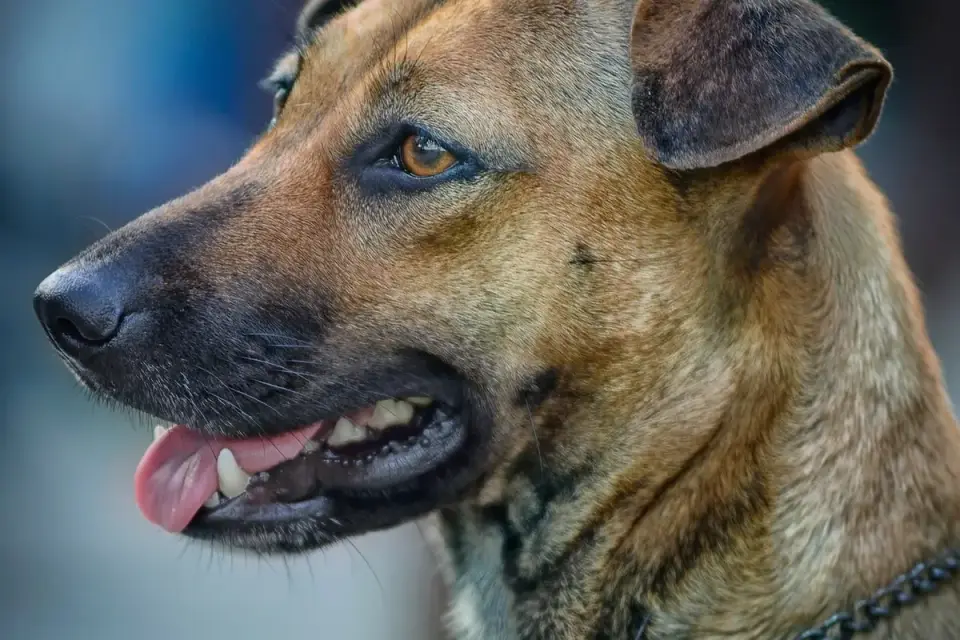
Sleep, stairs, and greetings: what early change looks like
Start with sleep. Night waking is often the first sign owners can count. A dog that slept through the night now paces once or twice between 1 and 4 a.m.
Next watch navigation. A dog may hesitate at stairs it once climbed easily. It may stand at the hinged side of a door. It may struggle to find a treat dropped in plain sight.
Then watch social behavior. Many dogs greet with less intensity. Some withdraw from petting. Others follow an owner from room to room more than before.
Angela noticed this with Bertha, her 8-year-old intact female Puggle mix in Broken Arrow, Oklahoma. Bertha began waking twice nightly for ten days. She also stood at the back door without signaling. The count made the change real. Two wakings per night, ten nights in a row.
House soiling belongs on the same list. The pattern is specific. The dog had reliable habits. Access has not changed. Medical causes have not been ruled out yet.
Why subtle signs get missed
Three factors hide early change. Pain competes for attention. Vision and hearing loss mimic confusion. Owners adapt without noticing.
That last factor matters most. You open the door a little wider. You add a night potty break. Life goes on.
The VCA Hospitals groups these age-related behavior changes into disorientation, altered interactions, sleep-wake shifts, house soiling, and activity change. That framework helps because it forces comparison across categories. One category can mislead. Three categories rarely do.
A related explainer on Signs Your Senior Dog May Have Canine Cognitive Dysfunction walks through the same pattern in more detail. Use it to calibrate what counts as new.
How to track change so your vet can use it
Teach from the evidence, one idea per sentence. Write the sign. Write the date. Write how often it happens.
Keep a two-week log. Note sleep, accidents, navigation errors, and social shifts. Record video of one or two episodes. A 30-second clip of pacing or staring answers more questions than a paragraph of recall.
Bring a medication and supplement list. Bring recent weight. Note appetite, thirst, and mobility. Cognitive signs overlap with pain, urinary disease, and neurologic disease.
Your vet will want to separate those causes first. Expect questions about hind-leg strength and joint pain. That triage is covered in Dog Hind Leg Weakness: Sorting Orthopedic Pain From a Neurologic Problem and How to Choose a Hip and Joint Supplement for Your Dog.
Do not start a supplement to test the diagnosis. Supportive nutrition has a role later. Diagnosis comes first.
Where the evidence is strong, thin, or mixed
Evidence is strong that structured owner questionnaires detect change earlier than memory alone. Standardized checklists improve agreement between owners and clinicians.
Evidence is strong that medical mimics must be ruled out. Hypothyroidism, chronic pain, sensory loss, and urinary disease can each produce signs that look cognitive.
Evidence is mixed on the gut-brain link in dogs. Laboratory models suggest the microbiome can influence behavior through immune and metabolic signals. Canine data remain early and mostly correlational.
So stay conservative on supplement claims. Favor structure/function language. Support normal brain aging and normal sleep patterns. Do not promise reversal or protection.
The Texas A&M School of Veterinary Medicine & Biomedical Sciences notes that veterinary evaluation should rule out other medical causes before diagnosing cognitive dysfunction syndrome. That stepwise approach is the standard to follow.
What should you ask at the visit? Could pain explain the night waking? Could vision or hearing loss explain the hesitation? What baseline bloodwork or blood pressure check makes sense at this age?
Frequently asked questions
How early can cognitive change start in dogs?
Large studies report subtle signs in some dogs by 8 to 10 years, with prevalence rising sharply after 11. Track new disorientation, sleep change, or house-soiling for two weeks and report a persistent pattern.
What is the difference between normal aging and early cognitive change?
Normal aging is gradual slowing with preserved navigation and house habits. Cognitive change adds new errors: wrong side of the door, night pacing, lost cues, or indoor accidents despite normal access.
Should I video my dog's behavior before the vet visit?
Yes. One or two short clips of pacing, staring, getting stuck, or night restlessness help your vet separate orthopedic, neurologic, and cognitive causes.
Sources
- Canine Cognitive Dysfunction — Texas A&M School of Veterinary Medicine & Biomedical Sciences