On this page
Poor sleep in an older dog is rarely just old age. In practice, vets often see the pattern before owners name it: more pacing after midnight, more daytime napping, less ability to settle through noise.
Work the case like triage. Stabilize what disrupts sleep first — pain, need to urinate, anxiety — then look at aging itself. Sleep does not single-handedly cause aging, but fragmented sleep tracks closely with how fast function declines.
Howard’s 12-year-old neutered Newfoundland, Jango, in Arlington, Texas, is a useful illustration. Howard counted three restless nights in one week, each with 20 to 40 minutes of panting and circling before Jango lay down. Nothing had changed in diet or exercise. That count gave the veterinarian something to work with: nighttime restlessness with preserved appetite, new at age 12.
Why does sleep change as dogs get older?
Total sleep time often stays high in seniors, sometimes 16 to 18 hours per day. What changes is continuity.
Healthy adult dogs cycle between slow-wave sleep and REM sleep, with REM supporting learning and memory consolidation. Older dogs show more awakenings, shorter REM bouts, and more daytime sleep that steals pressure from nighttime sleep. The result is not less sleep on paper. It is lighter, broken sleep.
Pain magnifies the break. Osteoarthritis, dental pain, and the need to urinate force position changes that fragment deep sleep. For hind-end stiffness that worsens overnight, the sorting framework in Dog Hind Leg Weakness: Sorting Orthopedic Pain From a Neurologic Problem helps separate mechanical pain from neurologic causes before assuming cognition is the driver.
How does broken sleep feed back on an aging body?
Explain the physiology before reaching for a fix. Sleep loss raises sympathetic tone and hypothalamic-pituitary-adrenal activity. Cortisol stays higher into the evening. Appetite, glucose handling, and gut motility shift with it.
That matters for the gut-brain axis this publication covers. Short-term sleep restriction in mammals alters microbial diversity and intestinal permeability markers, which can raise systemic inflammatory signaling. Inflammation, in turn, lowers sleep quality. Vets often see this as a loop rather than a one-way cause: poor sleep, looser stool or reduced appetite, then even poorer sleep.
The brain clearance piece is still mostly extrapolated from people and rodents. During slow-wave sleep, glymphatic flow increases, aiding removal of metabolic waste. The National Institute on Aging summarizes why consolidated slow-wave sleep supports memory and daytime function in older adults, a mechanism researchers are now testing in aging dogs with cognitive decline.
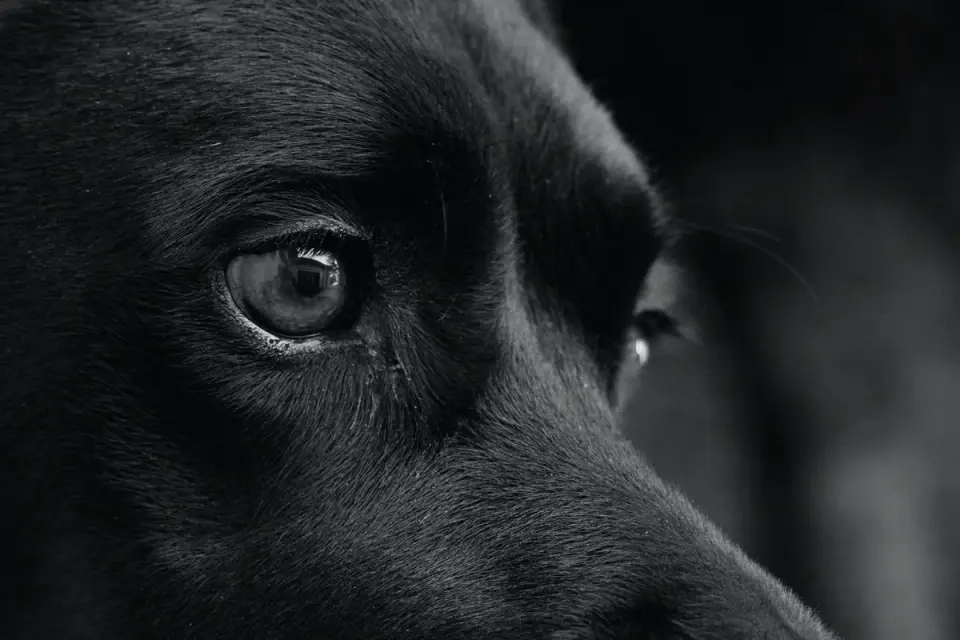
That link to cognition is direct. Nighttime vocalization, staring, getting stuck behind furniture, and house-soiling in a previously trained dog point toward canine cognitive dysfunction syndrome rather than normal aging. The checklist in Signs Your Senior Dog May Have Canine Cognitive Dysfunction is worth working through when sleep fragmentation lasts more than two weeks.
What should you track before changing anything?
One short paragraph can reset the plan: measure for seven nights.
Log bedtime, number of awakenings, minutes to resettle, any panting or pacing, and whether the dog needed to go out. Note daytime naps, evening exercise, late meals, and pain signs such as slow rising or reluctance on stairs. A consistent daily rhythm supports better settling, as reviewed in Should a Dog’s Longevity Chew Be Given at the Same Time Every Day?.
Bring that log to the exam. Bloodwork, blood pressure, orthopedic exam, and urinalysis rule out the medical interrupters that no supplement will fix. VCA Hospitals notes that behavior changes in senior dogs, including restlessness and altered sleep-wake cycles, often reflect pain or medical disease and deserve workup rather than dismissal as old age.
Where do I draw the line on sleep supplements?
Here is my evidence-bounded position: stabilize routine, light exposure, pain control, and nighttime access first, and hold off on a dedicated sleep supplement for aging itself until there are controlled dog data for that product and outcome.
Melatonin, L-theanine, casein blends, and probiotic or fiber products are widely marketed for calm or rest. Some have plausible structure/function rationale for supporting relaxation or normal gut flora balance. What I cannot yet support is the claim that any of them improves measured sleep architecture or slows cognitive aging in dogs. Safety data are also product-specific, and daytime sedation can worsen nighttime confusion in seniors.
What would change my mind is straightforward: a randomized, placebo-controlled trial in older dogs showing longer consolidated nighttime sleep or validated cognitive scores, with published dose, duration, and adverse events. Until then, I treat supplements as unproven for this job.
Support normal sleep the way the physiology suggests. Morning daylight and a short walk. Predictable feeding and bedtime. A low, supportive bed away from hallway traffic. A final potty break. Address joint discomfort with the approach outlined in How to Choose a Hip and Joint Supplement for Your Dog, only under veterinary guidance. Recheck in 14 to 21 days using the same sleep log.
Poor sleep accelerates how old a dog looks day to day. Restoring continuity often restores the dog underneath.
Frequently asked questions
How much sleep should a senior dog get?
Many seniors sleep 16 to 18 hours in 24 hours. Continuity matters more than total hours — frequent awakenings, pacing, or panting deserve a veterinary workup if they persist beyond two weeks.
Is nighttime pacing normal aging or dementia?
Occasional restlessness after a disrupted day can be normal. Nightly pacing, staring, getting stuck, vocalizing, or house-soiling in a trained dog fits canine cognitive dysfunction more closely and should be evaluated alongside pain and urinary disease.
Sources
- Good Night's Sleep — National Institute on Aging
- Behavior Changes and Pain in Aging Dogs — VCA Hospitals