If your dog has bloody stool, feed nothing new until your vet rules out urgent causes first.

On this page
Seeing bright red streaks or dark, tarry stool changes the feeding question from what helps to what is bleeding and why. Color, amount, and behavior matter more than appetite in that first hour, because blood from the colon and blood digested from higher up reflect different sites of barrier loss.
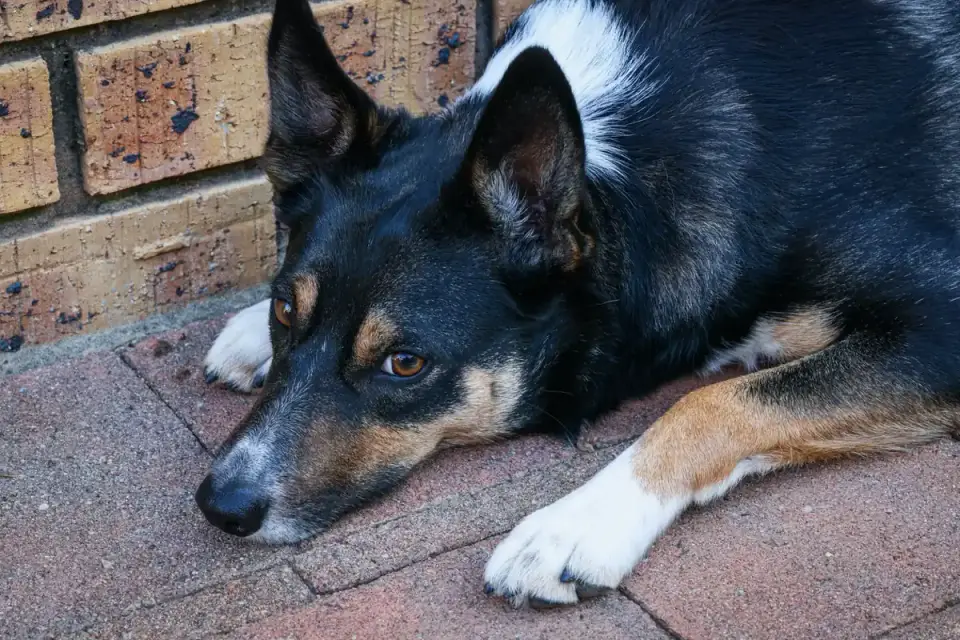
Tara noticed it with Leica, her 4-year-old spayed female American Staffordshire Terrier mix in Manchester, New Hampshire, when a normal morning walk ended with jelly-like red mucus on the second stool and two more urgent trips within three hours. She set the food bowl aside, saved a photo of the stool, and called her clinic before offering anything new.
Why blood resets the feeding plan
Blood means the mucosal barrier is disrupted. In the colon, infection, parasites, dietary indiscretion, foreign material, or acute hemorrhagic diarrhea can increase permeability and mucus secretion while speeding transit. In the stomach and small intestine, ulceration, high-fat indiscretion, toxins, or clotting disorders can leave blood partly digested and black by the time it passes.
That mechanism is why a bland meal cannot substitute for diagnosis. Plain chicken and rice does not seal tight junctions, clear parasites, replace fluid, or rule out obstruction. Guidance summarized by Merck Veterinary Manual notes that bloody diarrhea with lethargy, vomiting, pain, or dehydration warrants prompt veterinary assessment rather than prolonged home fasting or diet trials.
What color and context tell the gut
Bright red blood or red mucus on formed or soft stool points lower, toward colitis and rapid colonic transit. Dark, tarry, foul-smelling stool points higher, toward the stomach or small intestine where acid and enzymes alter hemoglobin. Large volumes of blood, clots, black stool, pale gums, collapse, belly pain or bloating, repeated vomiting, fever, known toxin or onion exposure, or a puppy, senior, or small-breed dog losing fluid fast all call for same-day care.
In practice, vets often see a day of home chicken and rice tried while blood continues. The exam, fecal test, parvovirus screen where appropriate, bloodwork, and sometimes imaging answer whether this is colitis, parasites, pancreatitis after fatty foods such as ham, a foreign body, or systemic disease. That answer decides whether food is withheld for a procedure, offered lightly at home, or given as a prescription recovery diet.
Hydration comes first.
How supportive feeding is thought to work after clearance
Once the veterinarian advises outpatient care, the goal is low-residue, low-fat, and easy to divide. Small, warm meals limit gastric distension and colonic bulk while maintaining energy and water intake. Plain boiled skinless chicken breast or lean turkey with plain white rice or plain cooked potato is the familiar example, offered in three to four small portions through the day rather than one large bowl.
Fat load matters during recovery. High-fat scraps can stimulate pancreatic and biliary secretion and quicken motility, which is unhelpful when mucosa is irritated. That is the same reason feeding guidance around avocado centers on fat load and digestion. Keep additions modest until stools improve. Plain pumpkin puree in a small amount may help support normal stool form as part of a balanced diet, through soluble fiber fermentation to short-chain fatty acids that feed colonocytes, but more fiber is not better while bleeding is active.
Hold the rest. No bones, rawhides, greasy table scraps, spicy foods, onion or garlic, grapes or raisins, xylitol-sweetened foods, extra oils, or new chews and supplements. Reviews of home care summarized by VCA Hospitals emphasize bland, divisible meals, close monitoring, and return to a complete and balanced regular diet gradually over three to five days once stools firm, unless the veterinarian prescribes otherwise.
When to call back and what would change my view
Call back for more blood, black stool, vomiting that prevents keeping water down, no improvement in 24 to 48 hours, lethargy, or refusal to drink. Bring the stool photo, a list of everything eaten in the past 72 hours, and all medications and supplements.
I reach for both careful workup and gentle nutritional support. Stay anchored to how bland feeding is thought to work, not what it might cure: it may help support normal digestive function while the underlying cause is treated. What would change my position is strong controlled evidence that any home diet resolves bloody stool without diagnosis. That evidence does not exist now, which is why examination comes before the bowl.