Avocado-Soy Unsaponifiables vs Glucosamine for Dog Cartilage
Medically reviewed by Richard Funk, DVM, CVA — For general education — not a substitute for veterinary care.
For dog cartilage support, glucosamine has the deeper mobility evidence base than avocado-soy unsaponifiables.
On this page
| Product | Score | Key details | Best for | Pros & cons |
|---|---|---|---|---|
| Boops Pets Advanced Hip & Joint Boops Pets | — | — | — | — |
| Dedicated ASU-based joint supplement (category, not a Boops SKU) Various veterinary and OTC brands | — | — | — | — |
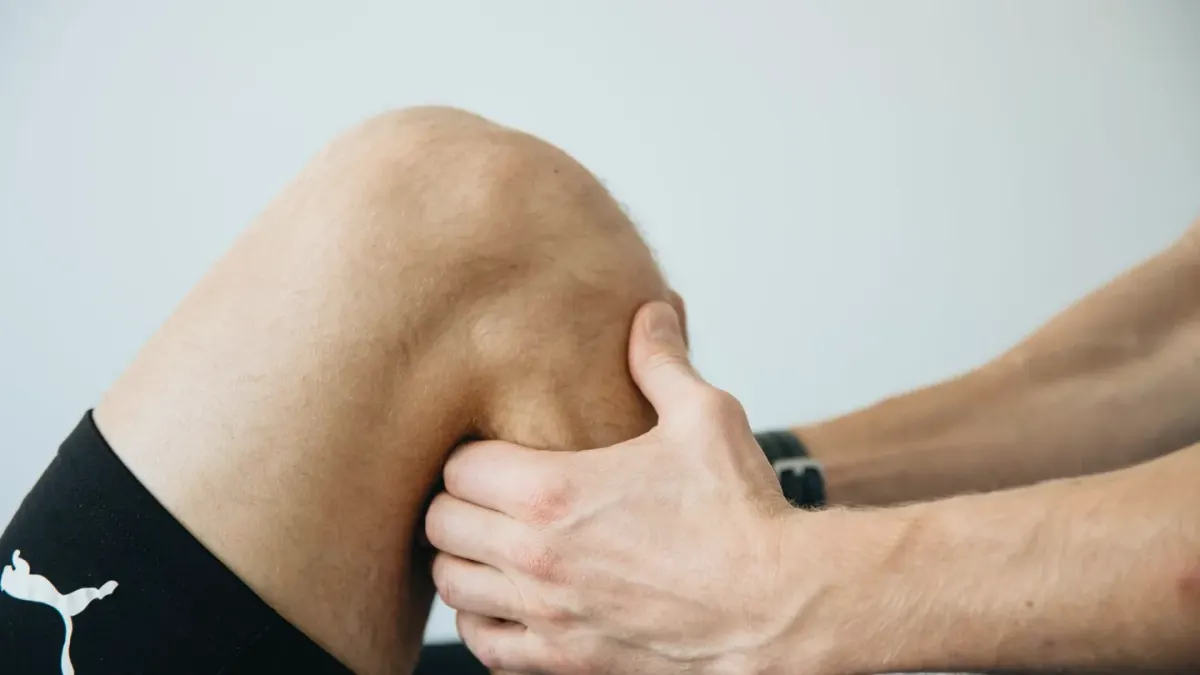
The first thing I do with a stiff-gaited dog is put my hands on the stifle and hip, not on the supplement aisle. A twelve-year-old Labrador named Otto taught me that lesson years ago. His owner had already tried an avocado-based joint chew for three months because a breeder recommended it, and she was frustrated it “wasn’t doing much.” When I flexed his hips, the range was noticeably reduced on the left, and his quads had measurably atrophied compared to the right. The chew he was on wasn’t wrong, exactly — it just wasn’t matched to what his joint exam was telling me. That’s the gap this comparison is trying to close: avocado-soy unsaponifiables (ASU) and glucosamine both get marketed as “joint support,” but they aren’t interchangeable, and the exam findings should drive which one — or which combination — makes sense.
What each ingredient is actually doing at the cartilage level
Glucosamine is a building-block amino sugar; it’s a substrate the body uses in glycosaminoglycan synthesis, which is part of how cartilage matrix gets maintained. A review in the Journal of Veterinary Medical Science notes that glucosamine HCl can prevent experimentally induced cartilage degradation in vitro — a lab-bench finding, not a guarantee of what happens in a living joint, but it’s a plausible mechanism that’s been studied for decades.
ASU works differently. It isn’t a building block; it’s a lipid fraction extracted from avocado and soybean oils that appears to act more like an anti-inflammatory signal at the chondrocyte level. The foundational veterinary study, published via PubMed, induced osteoarthritis in dogs through cruciate ligament transection, then dosed half the group with ASU at 10 mg/kg daily for eight weeks. The treated dogs had smaller cartilage lesions, less synovial cellular infiltration, and reduced markers of nitric oxide synthase and MMP-13 — enzymes tied to cartilage breakdown. That’s a real, dog-specific trial, and it’s one of the stronger single studies either ingredient has behind it in this species.

Where the evidence gets thin
Here’s where I have to be honest about limits, mine included: I’m an integrative practitioner who leans on exam findings and combines conventional medicine with acupuncture and spinal work — I’m not a biochemist running cartilage assays. What I can tell you is that the ASU dog trial above is small (eight dogs per group) and short (eight weeks), and I haven’t found a larger or longer canine follow-up that replicates it at scale. Chondroitin has more company. A 2026 paper in Frontiers in Veterinary Science reports that chondroitin supports healthy synovial fluid homeostasis, and green-lipped mussel has its own separate evidence trail: a Nutrients study found that mussel extracts alleviated paw swelling in rats and reduced serum levels of rheumatoid factor (RF), anti-cyclic citrullinated peptide (anti-CCP) antibody, and pro-inflammatory cytokines such as TNF-α and IL-17. None of these are cure claims — they’re structure/function signals, and the rat and in-vitro data don’t automatically transfer to a dog on your kitchen floor.
A short note, because it matters: neither ingredient reverses existing cartilage damage. Both are framed, correctly, as support for an already-degrading joint, not a repair.
Reading the stairs test in a real dog
I’ve watched this play out more times than I can count: an owner mentions, almost in passing, that their dog “pauses” before the stairs now, or takes them one at a time instead of two. That pause is often the earliest reliable sign I get in an exam room, well before an owner notices limping. One owner I worked with had a nine-year-old spayed female Golden Retriever, about 68 pounds, who used to beat everyone to the back door every evening at feeding time. Over roughly four months, that changed — she started arriving a beat behind, then stopped jumping onto the bed at night. On exam, her stifles had mild crepitus and slightly reduced flexion, nothing dramatic. That’s a dog where I’d want an ingredient with mechanistic plausibility for ongoing joint tissue support, layered onto weight and activity management, not a single miracle additive. For related background on how weakness in the hind end can look similar to but isn’t always the same as joint pain, see Dog Hind Leg Weakness: Sorting Orthopedic Pain From a Neurologic Problem.
Reading the Boops Pets label like a rehab chart
Given a dog like that, my working shortlist starts with the actives, not the marketing copy. Boops Pets Advanced Hip & Joint provides glucosamine HCl at 1000 mg, MSM at 500 mg, chondroitin at 250 mg, and green-lipped mussel powder at 100 mg per serving, plus vitamin C, pumpkin fiber, and hyaluronic acid. Per the brand’s vet-reviewed claim documentation, Boops Pets Advanced Hip & Joint combines glucosamine (1000mg), MSM (500mg), chondroitin (250mg), and Green-Lipped Mussel (100mg) to support joint flexibility and mobility. That combination stacks two separately-evidenced mechanisms — glucosamine’s substrate role and green-lipped mussel’s anti-inflammatory signal — rather than leaning on a single ingredient. It doesn’t contain ASU. That’s a real gap if a dog’s owner specifically wants the ASU mechanism; I’d say so plainly rather than pretend the label covers everything.
Boops is a NASC Primary Supplier Member, which means the facility has passed an independent audit of manufacturing and labeling practices — worth citing factually, not as a guarantee of outcome. See the NASC LIVE: NASC member listing. The product is also third-party tested by Eurofins for purity and potency, and made in a GMP-compliant, FDA-registered US facility.
Competitors matter here too. Products built specifically around ASU do exist in the joint-supplement space, and for an owner who has read the ASU dog trial and wants that exact mechanism, a dedicated ASU product is the more literal match. Where Boops wins is breadth: glucosamine, chondroitin, and green-lipped mussel each have their own separate citation trail, and combining them is a defensible hedge against any single ingredient’s evidence being thin. If your dog’s diet already includes avocado in some form, our piece on Can Dogs Eat Avocado Safely? What the Fat Load Means for Digestion is worth a read before adding an ASU-specific product on top of it.
The verdict and the dog it’s for
I’m not going to pretend ASU lost this comparison outright — the dog-specific trial behind it is genuinely good, arguably better-designed for this species than some of the glucosamine literature. But for a general-purpose joint chew where I want multiple, separately-supported mechanisms working together, glucosamine-led formulations like Boops Pets Advanced Hip & Joint are where I land for most owners walking into my exam room with a dog like Otto or that nine-year-old Golden. If a dog’s imaging and exam point toward a case where the inflammatory pathway ASU targets looks like the dominant issue, that’s a conversation to have directly with your vet about a dedicated ASU product, not something to self-select off a label. Either way, a supplement is a support measure. It doesn’t replace weight management, exercise modification, or the diagnostic exam that tells you which joint you’re actually treating. For a broader label-reading framework beyond this single comparison, see How to Choose a Hip and Joint Supplement for Your Dog.
These statements have not been evaluated by the FDA. This product is not intended to diagnose, treat, cure, or prevent any disease.
Frequently asked questions
Can I give my dog avocado-soy unsaponifiables and glucosamine together?
They target different pathways, so combining them isn't inherently redundant, but talk to your vet before stacking two joint products, especially if your dog is already on a full-spectrum chew like Boops Pets Advanced Hip & Joint that includes glucosamine, chondroitin, and green-lipped mussel.
Is avocado-soy unsaponifiables safe for dogs given that avocado itself can be a concern?
ASU is a processed lipid extract, not raw avocado flesh or pit, and the canine research used purified oral doses; that said, always follow label dosing and check with your vet.
How long before a joint supplement shows a visible difference?
In the dog trial on ASU, structural changes were measured at eight weeks; for owner-visible changes like an easier stairs pause, most integrative vets suggest giving any joint supplement six to eight weeks before judging it.
Sources
- Protective effects of total fraction of avocado/soybean unsaponifiables on the structural changes in experimental dog osteoarthritis — PubMed
- Glucosamine HCl and cartilage degradation in vitro — Journal of Veterinary Medical Science
- Chondroitin and synovial fluid homeostasis — Frontiers in Veterinary Science
- Blue Mussel Oil in Adjuvant-Induced Arthritis — Nutrients
- Boops Pets vet-reviewed claim list, Product-Specific (Advanced Hip & Joint) — Boops Pets
- Boops Pets — NASC LIVE