Yes, dogs can have cooked, ground corn in small portions when it is plain and fully balanced.
On this page
Plain cooked corn can fit in a homemade bowl for dogs, and the form matters more than the ingredient itself. Ground, thoroughly cooked cornmeal or grits gelatinize their starch and become a digestible energy source, while whole kernels pass through largely intact and cobs can block the intestine.
Onix, a 2-year-old neutered male French Bulldog from Boise City, Idaho, shows why the distinction matters. His owner Ricardo shared sweet corn cut straight off the cob as a topper, and stools stayed formed. When Onix later stole a discarded cob end from the trash, he started drooling and retching within hours — a classic foreign-body pattern that needs same-day veterinary care.
Why cooked and ground corn digests differently
From a neurology and TCVM food-therapy view, I stay anchored to how a food is thought to work in the gut rather than what it might cure. Corn endosperm is mostly starch. Heat plus water swells those granules, and grinding breaks the tough pericarp so pancreatic amylase can reach the starch. That milling and cooking step may help support steady energy delivery without excess fermentation.
Whole kernels keep that pericarp intact. Dogs chew poorly and transit is relatively fast, so many kernels appear whole in stool. That is not toxicity — it is low access.
How much corn fits in a balanced homemade recipe
Think of corn as one carbohydrate choice among rice, oats, barley, and potato, not the base of the diet. For most healthy adult dogs, a cooked carbohydrate portion of roughly one-quarter to one-third of the plate by cooked weight is common in home-formulated recipes, with animal protein, fat, calcium, essential fatty acids, vitamins, and minerals filling the rest.
In practice that means 1–3 tablespoons of cooked cornmeal or polenta for a small dog and up to about one-half cup for a large dog per meal, adjusted to total calories. Keep it plain — no butter, salt, onion, garlic, cheese sauce, or xylitol-containing spreads. Dogs with diabetes, chronic pancreatitis, or suspected corn allergy need an individualized plan, and puppies, pregnant females, and seniors need tighter nutrient targets. My two background reads on this are How to Balance a Homemade Dog Food Diet and Do You Need Supplements for Homemade Dog Food?.
What stays out of the bowl
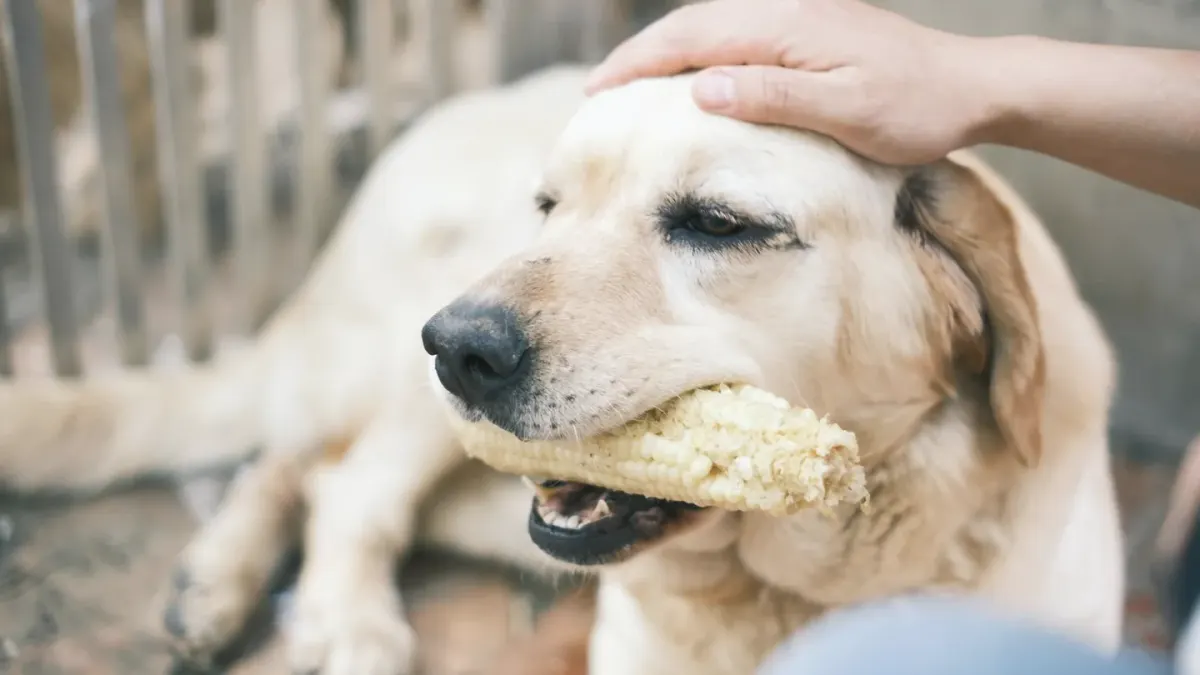
Never feed corn on the cob or cob pieces. The Merck Veterinary Manual describes gastrointestinal obstruction in small animals as a surgical emergency, and corn cobs are a textbook cause because they lodge in the pylorus or small intestine. Vomiting, loss of appetite, abdominal pain, and no stool after cob chewing warrant urgent imaging.
Also avoid unpopped popcorn kernels, heavily salted or buttered popcorn, cornbread with onion or excess sugar, tortilla chips, and creamed corn. If you use canned corn, rinse and choose no-salt-added, and count it as a small topper rather than a staple because whole kernels add bulk without much usable energy.
Simple ways to prepare corn at home
Use yellow cornmeal, grits, or frozen kernels you cook soft and then mash or blend. Simmer cornmeal in water until thick and fully soft, cool to room temperature, and mix into the protein and vegetable blend. For frozen kernels, boil until very tender, then pulse briefly so the skins split. Introduce over 3–4 days and watch stool form, gas, and itch. If stools loosen, reduce the amount rather than adding more fiber on top.
Owners batch-cooking often find plain polenta cakes easy to portion and refrigerate, much like other plain fibers discussed in Can Dogs Eat Apples? What the Gut Microbiome Actually Does With the Fiber and Can Dogs Eat Bananas? What the Fiber-to-Sugar Ratio Actually Does in the Gut. Food-first still means formula-first: corn supplies calories, while meat, organs in controlled amounts, calcium source, fish oil, and a vitamin-mineral balancer supply what corn cannot.
Frequently asked questions
Is corn toxic to dogs?
No. Plain cooked corn is not toxic. The risk is mechanical — cobs can obstruct — and nutritional when corn displaces protein, fat, calcium, and essential nutrients in homemade food.
Can dogs eat corn kernels off the cob?
A small amount of plain, cooked kernels cut off the cob is generally tolerated, but many pass whole. Mashed or ground cornmeal delivers more usable energy.
What should I do if my dog ate a corn cob?
Call your veterinarian right away. Do not induce vomiting unless directed. Vomiting, drooling, abdominal pain, or no stool after cob ingestion needs urgent evaluation for obstruction.